
Ayla was 2.5 years old when she corrected my grammar mid-sentence.
I was telling her something about a bird we’d seen outside, used the wrong word, and she just — stopped me. Calmly. Use the right word. Turned to look at me like she was waiting to see if I’d gained it. I laughed it off because, is there anything else you do? When a toddler corrects you. But it stayed in my head longer than it would have been better if I had.
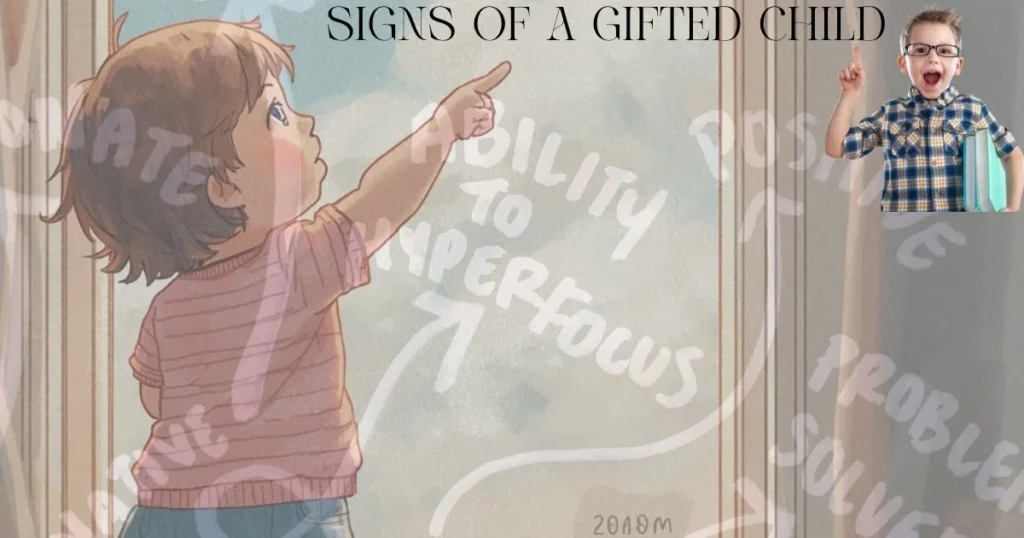
Then a few weeks later she got fixated on clouds. Not casually — like, intensely. Asked me why clouds were different shapes. Why some were grey. What made them move. I ran out of answers by question four. She was three. I had a degree. I started quietly wondering if what I’d been assuming was just “a curious kid” might actually be something more specific than that.
What Signs of a Gifted Child Really
Signs of a gifted child Don’t stare the way most people imagine: no gold stars, no obvious prodigy moment.
Only 6.1% of K–12 students in the US receive formal gifted education — and that number drops dramatically by income level, from under 4% in the lowest income bracket to nearly 20% in the highest. Which means a lot of gifted kids are being missed, not because the signs aren’t there, but because nobody’s looking in the right places.
Giftedness isn’t just high grades. Psychologists describe it as multidimensional — quick learning, deep curiosity, strong problem-solving, heightened sensitivity, and a drive to seek challenge. A child can be gifted and still struggle with handwriting, motor skills, or fitting in with kids their own age.
The Early Signs — What I Started Noticing
The vocabulary thing kept happening after that first correction.
Gifted children often use words and sentence structures well above their age level — not because they’ve been drilled on vocabulary, but because they absorb language differently and faster. Ayla was doing this from around two years old, using full complex sentences when most kids her age were still putting two or three words together.
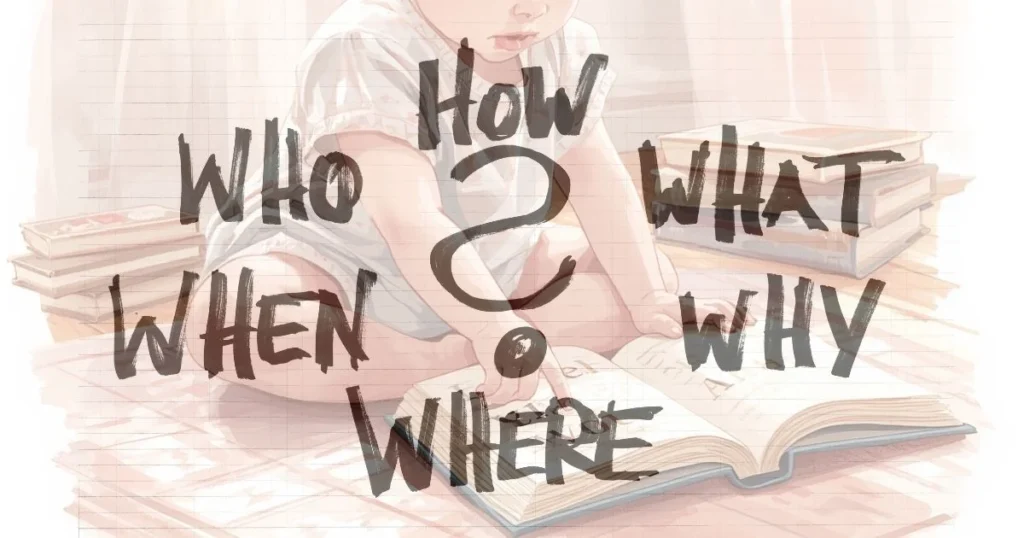
Here’s what nobody told me — early reading and early symbol recognition are among the clearest early indicators. Recognizing letters, grasping how words work, showing interest in books as actual information sources rather than just bedtime props. These show up well before formal schooling, often years earlier than expected.
Intense curiosity is the other one. Not general curiosity — specific, repeated, deep curiosity about one topic at a time. The cloud questions weren’t random. She came back to clouds for days. Asked things I had to actually look up. That depth of interest, that persistence — that’s the sign most parents miss because it looks like stubbornness or fixation rather than a cognitive pattern.
Around Age Two to Three — When Things Changed
The hyperfocus showed up properly around this stretch, and it genuinely confused me at first.
Hours on one topic. Real depth of knowledge, at age three, about subjects I hadn’t introduced her to. She’d overhear something once and retain it completely, pulling it back out in conversation days later. Memory above average is a recognized sign — recalling details from much earlier, processing information from a single exposure that most kids need repeated reinforcement on.
Honestly, this surprised me too. I had assumed gifted meant fast at everything. Ayla was fast with language and ideas and memory. She was completely average — sometimes behind — on things like fine motor skills and sitting still. Uneven development like that is actually common in gifted children: advanced reading and language alongside weak handwriting or motor skills. The unevenness itself is part of the profile.
I’ve been there — watching your child do something that seems impossible for their age, then watching them struggle with something that seems basic. It’s confusing from the outside. Turns out it makes sense once you understand what you’re actually looking at.
What Surprised Me Most
The social piece completely caught me off guard.
Gifted children often prefer older children or adults for conversation and connection. Not because they’re antisocial — because they’re looking for matching conversation and interests, and kids their own age often can’t provide that yet. Ayla would sometimes drift toward adults at family gatherings, joining conversations that had nothing to do with kids. I kept gently redirecting her toward the other children. That was probably the wrong call. Let me be real with you — emotional intensity in a gifted child can look like a behavior problem. Big reactions to small problems. Perfectionism that triggers real distress when something goes wrong. Sensitivity that seems disproportionate. People label these as “too dramatic” or “too intense” when they’re actually part of the same Individual brain differences as the advanced vocabulary and the focusing intensely. They’re connected. You can’t take one without the other.
This one thing changed everything for me — giftedness can coexist with ADHD, autism, or learning difficulties. “Double Special characteristics” is now specifically recognized in research and policy. A child who’s gifted and has ADHD can have the hyperfocus and the advanced reasoning alongside the attention dysregulation. One doesn’t cancel out the other. Both need support.
When to Actually Talk to Someone
Most gifted signs on their own don’t require urgent action. But a few situations are worth a real evaluation rather than waiting.
If your child shows very advanced vocabulary and early reading before school age — combined with intense curiosity and a clear preference for older conversation — a formal evaluation is worth pursuing. Specialist assessment for giftedness typically includes family interviews, teacher input, developmental history, and structured evaluation. Not just an IQ test. The full picture matters.
The other situation worth flagging is when those emotional or social struggles are getting significant. A gifted child who’s miserable at school because they’re bored, or who’s struggling with perfectionism to the point of anxiety — that needs support, not just reassurance that “they’ll be fine because they’re smart.” Experts are clear that assuming a bright child will manage without support is one of the most common and costly mistakes.
What Actually Helped Us
I started documenting things instead of just noticing them.
Specific moments. Conversations. Things she said that surprised me. Questions she asked that I couldn’t answer. Behaviors that repeated. Three months of that gave me something concrete to bring to her pediatrician — a pattern instead of a vague feeling that she might be different in some way I couldn’t quite explain.
I also stopped assuming the school would flag it. Only 6.1% of children get formally identified, and identification is heavily weighted toward income and access. If I waited for the school to recognize and respond, I could have waited a long time. Advocating early, keeping a regular record, and including her pediatrician directly made more of a difference than Anything further.
And I stopped trying to redirect the hyperfocus. Ayla’s intense, narrow interests — clouds, then animals, then how things were made — weren’t problems to solve. They were the thing itself. Following that curiosity instead of controlling it around a schedule opened up conversations and taught that no planned Highest level of activity.
FAQ
1. What are the most typical signs of a gifted child parents miss?
Advanced vocabulary for their age, intense and persistent curiosity on specific topics, hyperfocus, very early reading or symbol recognition, and strong memory after a single exposure. These show up early and often get dismissed as “just a curious kid.”
2. Does my child need high grades to be gifted?
No. This is one of the most frequent mistakes. Giftedness has many aspects — quick learning, strong curiosity, problem-solving ability, and emotional intensity is part of the overall picture. A gifted child can underperform academically, especially ifThey’re losing interest or are unchallenged.
3. Is it possible for a child to be both gifted and neurodivergent?
Yes — this is called “double exceptionality,” and it’s formally recognized in current research and educational policy. The giftedness and the coexisting condition both need to be identified and supported separately.
4. My child has intense emotions and big reactions — could that be a sign of giftedness? Possibly. Emotional intensity and heightened sensitivity are recognized traits in gifted children. They’re part of the same neurological profile as advanced language and hyperfocus — not separate behavior problems.
5. When should I seek a formal evaluation?
If your child shows a combination of signs consistently — advanced vocabulary, early reading, intense curiosity, strong memory — especially before school age, it’s worth mentioning with your pediatrician and having your child professionally evaluated. Don’t wait for the teacher to mention it first.
I still don’t know exactly what Ayla’s profile looks like on paper. She’s three, and we’re still figuring it out one cloud question at a time.
What I know is that I stopped dismissing the signs and started paying actual attention to the pattern. That shift — from “she’s just curious” to “I should document this and ask someone” — is the one thing I’d tell any parent who’s had that same quiet wondering feeling.
You probably already know something is different. Trust that.
With love from BabyGuideNest 💛
A Quick Note:
I’m a mom, not a doctor. Everything I’ve shared here comes from my own experience with Ayla and research I’ve done along the way. If something in this post makes you wonder about your own child — take that feeling seriously and talk to your pediatrician. A real evaluation from a real specialist will always tell you more than any blog ever can. Trust your gut, but get a professional opinion too.