
Eighteen months is one of the most memorable times in your child’s life. It feels like they are seeing something for the first time every single hour — exploring ,heartwarming, figuring things out, and displaying who they are becoming. Their personality begins to reach full growth at this age, just as the old saying goes: you can tell the nature of a tree by its fruit. The kind of thinker, feeler, and doer your child will become starts showing itself right now — and it is a beautiful thing to witness. The changes happening at this age may look small on the outside, but inside? They are enormous.
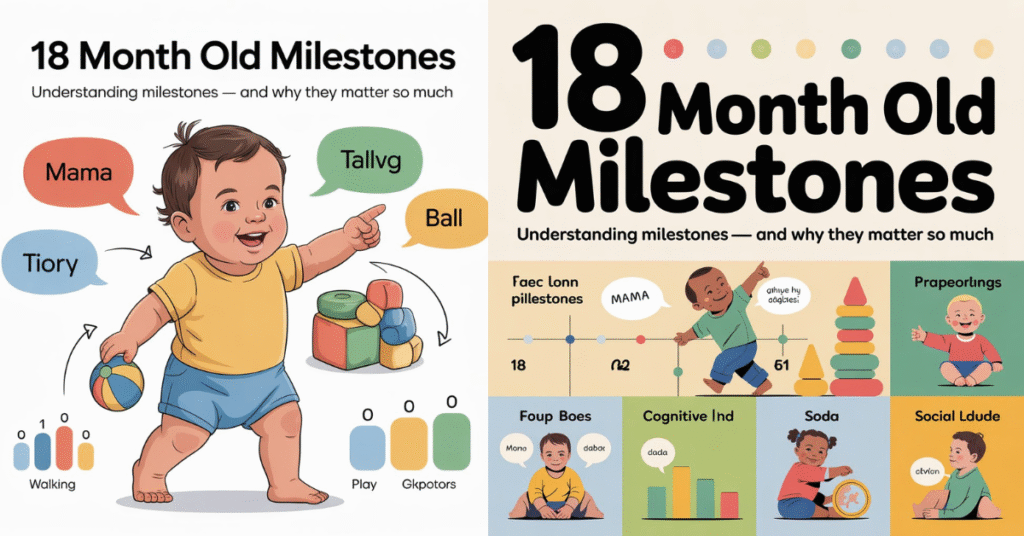
Understanding Milestones — and Why They Matter So Much
Milestones are the skills and abilities that approximately 75% of children develop around a certain age. They are not a Must-follow checklist — they are Signals that help you understand how your child is gaining knowledge and maturing.
At 18 months, learning stages cover how your child thinks, moves, communicates, and bonds with others. A new social world is developing— your toddler is beginning to share their things with others, begin to show their likes and dislikes, and yes, sometimes get irritated when things don’t go their way.
That little flash of stubbornness? It is actually a sign of healthy development.
Tracking these milestones matters most because you spend the most time with your child. That makes you the best person to notice when something new emerges — and the best person to support it.
What Is Your 18-Month-Old Doing Right Now?
There are tiny booms happening in your toddler’s brain each and every day. Here is what you will start to notice:
Thinking & Learning
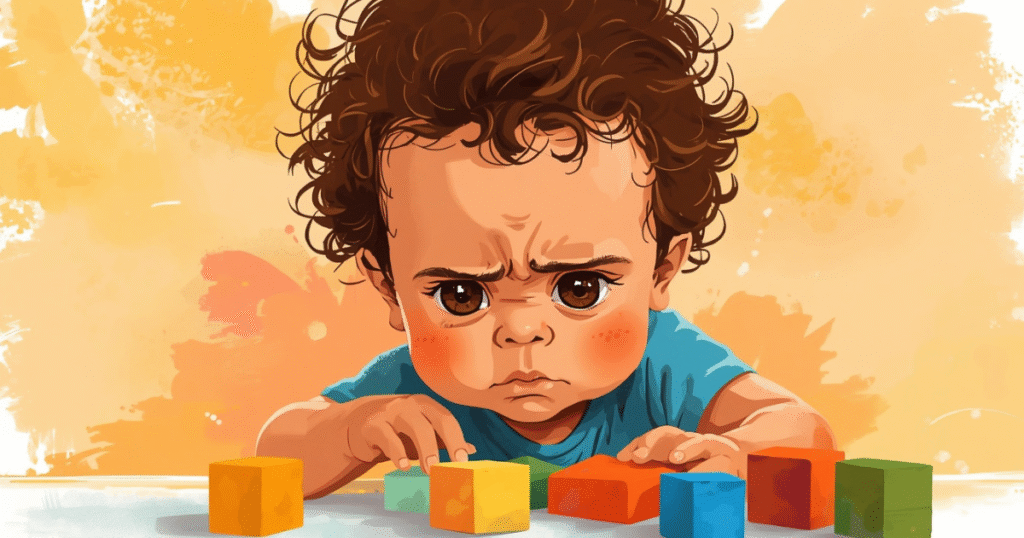
Your toddler is busy looking around and making sense of their world from day to day. They’re not simply paying attention to — they’re thinking, learning, and learning to connect with others in their mind. This meaningful moment, known as joint attention, helps lay the foundation for language and relationships.
Independence With a Safety Net

Your toddler will move away to play, explore sides of the room, and move around with a newfound feeling comfortable — but they will keep looking back to check that you are still there. This is totally normal. They are building doing things on their own while still needing the security of knowing you are close.
Copying Everything You Do
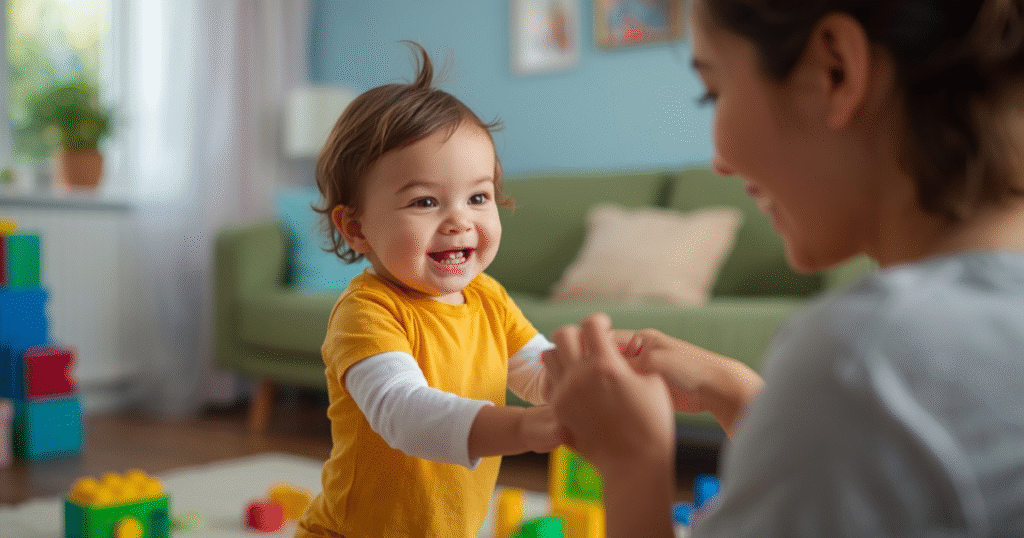
At this age, learning by copying is how children learn. Toddlers during this age don’t miss even a single thing. Your toddler sees you wipe down the counter and thinks — I can do that. Watch you tidy up and shuffle over to help. Sees you hand something across and does it the next chance they get. It’s one of those everyday moments you almost miss, but when you catch it, it hits uniquely. They’re trying to get it. And they want in.
Following Simple Instructions
Try saying “give that to me” and watch what happens. Your toddler looks at you, processes it, and hands it right over. It’s such a quick moment — but it’s actually huge. They’re not just listening to your words. They’re reading your tone, picking up on your gestures, and putting it all together into meaning. And here’s the part that really surprises parents — many toddlers at this age can already follow two-step instructions. “Pick up the toy and bring it here.” Just like that, they do it. That’s not a small thing. That’s their little brain making a genuinely big leap.
Starting to Speak
Somewhere around this stage, the words begin. Just a handful at first — 3 or 4 — but many toddlers are finding their way to 10 or even 20 by month’s end. They won’t all come out perfectly, and that’s completely fine. Every attempt counts. Every little word, clear or not, is worth celebrating. What’s really amazing is how much they already understand — way more than they can actually say. And don’t overlook the gestures either. That little wave goodbye, the head shake for no, the nod for yes — those are real communication wins. They’re talking to you. Just in their own way.
Physical Confidence
- There’s something about watching your toddler walk across the room — completely on their own — that never gets old. Just them, going for it. A lot of kids this age are even starting to run, still a little unsteady but full of energy. And honestly, the physical milestones just keep coming.
- They’re picking up crayons and making their mark — literally.
- They’re feeding on their own, spills and all. They’re moving up on and off furniture like they own the place. And that little bend down they do to grab a toy off the floor?
- That’s actually a real balance achievement, even if it looks effortless.
Why Understanding Your Child’s Development Matters
Because you are with your child above everyone else, you are well placed to notice their growth. Understanding what to expect at this age helps you:
- Celebrate the right moments
- Respond in ways that encourage more learning
- Spot early if something needs attention
Growing up isn’t a competition. Every child gets there in their own time, and that’s not just okay — it’s completely normal. Some children walk earlier but talk later. Others speak early but are more cautious about movement.
Milestones are guides, not deadlines. What tells the real story isn’t whether your child hit a skill at exactly the right week — it’s whether they’re growing, connecting, and finding their way forward. And if they are, even slowly, even quietly — that’s everything. You’re doing better than you think.
When Should You Seek Support?
Early detection is everything — and being aware of red flags does not mean you should panic. It means you are paying attention like the caring, responsive parent you are.
Reach out to your doctor if you notice:
- Your child is not walking at all
- No words — or fewer than 6 words by this age
- No pointing or use of gestures to communicate
- No eye contact or not responding to their name
- Not imitating simple actions or expressions
- A clear loss of skills they previously had
Any of these signs deserve a talking to your child’s doctor sooner rather than later. Your 18-month well-child visit is also a good opportunity to talk about immunizations, screenings, and get personalised advice for your child.
Here’s a simple way forward:
- Consult your doctor and clearly share your specific observations.
- Book a proper developmental checkup
- Consult a specialist if your doctor recommends one
- Reach out to an early intervention centre — these are specifically designed to support children who may need a little extra help
Early support really does matter. When you act sooner, the chances of better outcomes increase significantly.
Simple Ways to Support Your 18-Month-Old Every Day
You don’t need much — just the small, everyday moments you’re already living.
You just need to show up gently, consistently, and with a little encouragement — that’s what makes the biggest difference. No special things you’ll need, no programs to follow. Just you, showing up consistently in small, warm ways — day after day.
Cheer them on. Did they pick something up without being asked? Share a snack? Follow along when you said it was time to tidy? Tell them how proud you are. Mean it. That feeling of doing something right stays with them longer than you’d think.
Stay calm with the little things. For small misbehaviours, a gentle redirect goes much further than a reaction. Giving attention to unwanted behaviour — even to correct it — can accidentally encourage more of it.
Let play do the teaching. Toddlers often make their biggest progress while they’re simply having fun—without even realizing how much they’re growing.
Say their word back and add a little more detail. If they say “dog,” respond with, “Yes, the big fluffy dog!” It sounds simple because it is — and it works better than almost anything else for building language at this age.
Read together and sing together. Every picture book, every nursery rhyme is quietly doing something important. Point, name, repeat — and little by little, their world gets bigger.
Hold the routine. Predictability is comforting for toddlers. When they know what’s coming — especially around sleep — they feel settled. And settled children grow in the most beautiful ways.
Conclusion
The 18-month stage is truly one of the most powerful periods in your child’s entire development.
see everything your toddler is doing right now. Really look. Moving through the world on their own, finding words, making connections, understanding things they couldn’t yesterday. All of it is new. All of it happening at once.
Those wobbly steps across the room. A word they’ve never said before. Handing something over just to be kind. Turning around mid-play just to check you’re still there.
None of it needs a grand response from you. Just stay close. Stay consistent. Make them feel seen when they get something right. You’re not just hitting milestones — you’re building the kind of foundation that quietly shapes everything they become. And you are doing an amazing and great job.
Frequently Asked Questions
Q1: Words — how many is enough?
A: 10 to 20 is the sweet spot at this age. Under 6 words and no pointing or gesturing? Bring it up with your doctor. A simple argument and counter argument can give you real clarity.
Q2:No walking at 18 months — is that a red flag?
A: It happens. But if there’s no walking at all, or movements seem stiff or unusual, get it checked. Early is always better.
Q3: When should I actually be concerned?
A: If your toddler has no words, avoids eye contact, doesn’t respond to their name, or has lost skills — don’t sit on it. Call your doctor.
Q4: How do I help them grow at home?
A: Name everything. Read every day. Also check our newborn care guide for early development tips. Respond every time they try to reach you. Keep bedtime consistent. Simple habits, big results.
Q5: Tantrums every single day — is that okay?
A: Yes. Completely okay. They have enormous feelings and tiny vocabulary. Be their calm in the storm. That’s genuinely enough.