
Baby teething symptoms can start earlier than most parents expect — and they look different for every child. My daughter started showing teething symptoms in babies’ classic way — drooling at three months old, and I immediately convinced myself she was teething.
She wasn’t. She was just a very drooly baby. Her first tooth didn’t actually appear until she was nearly six months old — and when it did, I almost missed it entirely because I’d stopped looking after months of false alarms.
What followed was two and a half years of watching tiny teeth push through one by one, each with its own personality. Some came quietly with no drama at all. Others announced themselves a full week in advance with crying, night waking, and a general atmosphere of devastation in our house. All twenty baby teeth were done by the time she was two and a half. Twenty teeth. I counted.
If you’re in the middle of it right now, here’s everything I wish I’d known from the beginning.
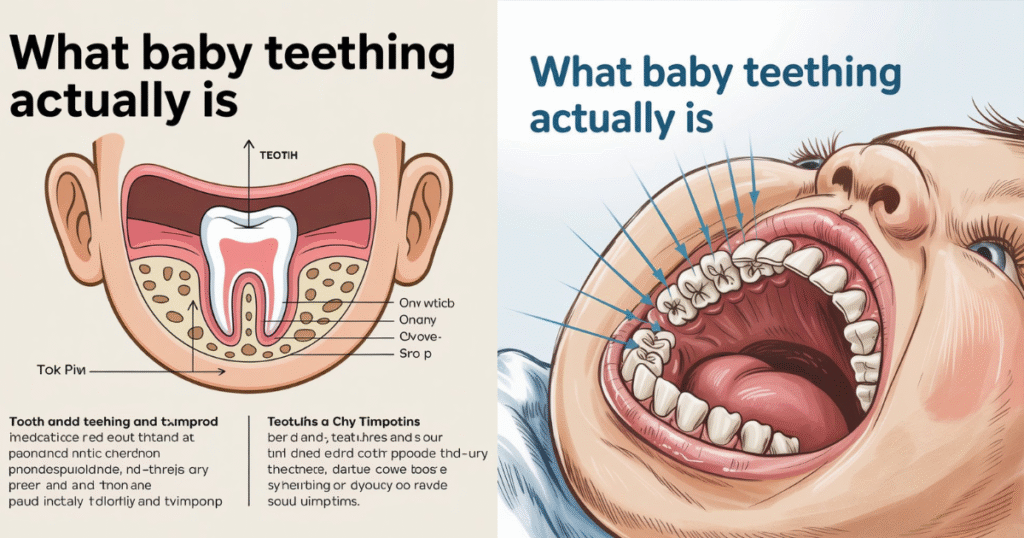
What Baby Teething Actually Is
Here’s the thing — teething gets blamed for a lot of things it isn’t responsible for. one of the most common teething symptoms in babies is..
Fever. Diarrhea. Serious illness these teething symptoms in different babies can look different…. Parents — myself very much included — look at a miserable baby and land on teething as the explanation because it’s the most available one. The reality is that teething causes discomfort and irritability, drooling, and disrupted sleep. What it doesn’t reliably cause is high fever. Teething gets the blame for fever constantly. It shouldn’t. A real fever — above 38°C — is rarely a teething thing. If your baby is running that kind of temperature, something else needs checking.
The timing of the first tooth is all over the place, honestly. Four to seven months is the general range, but it’s just a guide. Some babies cut teeth early, and some are still gummy on their first birthday. Neither is a problem.
Both are within the normal range. All 20 baby teeth usually finish coming in by age 2 to 3.
The Symptoms That Are Actually From Teething
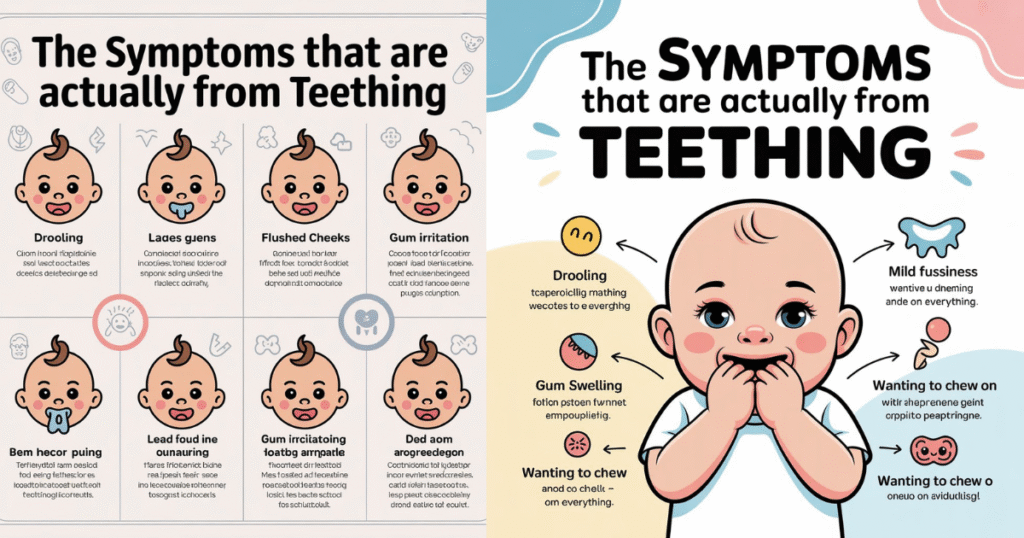
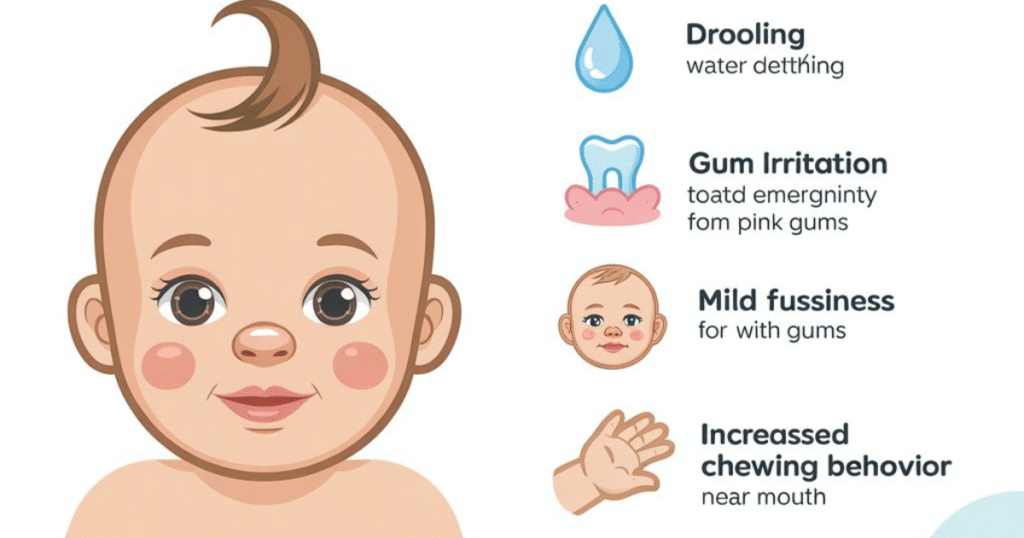
The most common baby teething symptoms are easier to spot once you know what you’re actually looking for. My daughter’s teething warning signs were always the same. Fist in mouth constantly. Drooling through her outfit by 9am. Waking up twice in the night for no obvious reason. Fussier than usual during feeds.
Drooling is one of the most consistent teething symptoms — surveys put it at around 12% frequency as a reported symptom. It can also cause a rash around the mouth and chin. Here’s what nobody told me — the teething rash isn’t from the tooth itself. It’s from the constant moisture on the skin. Keeping her face gently dry and applying a thin barrier cream helped much more than I expected.
Disrupted sleep was the hardest part for us. During the day, she had things to look at, things to chew, and me to distract her. At night, there’s just nothing to distract them from it. No toys, no movement, no noise. Just the discomfort and the dark. Some nights, I was up so many times I genuinely stopped counting. At some point, I put my phone face down so I’d stop seeing the time. Two hours, back to sleep, two hours, back up again. By 3 a.m., I’d stopped even trying to fully wake up between trips to her room. I was just moving through the house on instinct. Nobody warns you about teething nights properly. They really should. Honestly, this surprised me too — some teeth came through with absolutely no symptoms at all. I’d notice a new tooth during a routine check and have no memory of any difficult nights around that time. Not every tooth announces itself.
What Actually Helped Us
Once you’ve confirmed baby teething symptoms, these are the remedies that genuinely helped. The cold was the most effective thing I found. Full stop.
A clean rubber teether that had been in the fridge — not the freezer, frozen solid is too hard for baby gums — gave her something firm and cool to press against the sore area. She’d go at it for twenty minutes and come up noticeably calmer. Cold, solid rubber teething rings are genuinely the most useful teething purchase you can make.
A frozen washcloth worked the same way when we didn’t have a teether handy. I’d wet it, fold it, freeze it for twenty minutes, and hand it over. She loved it. Cheap, simple, effective.
Gum massage with a clean finger helped too — just gentle circular pressure directly on the area where the tooth was coming through. I did this before feeds when she was too uncomfortable to latch properly. It settled her enough to feed. This one thing changed everything during our worst teething feeds.
For nights that were really bad — and I want to be clear that I only did this after checking with my pediatrician — age-appropriate infant paracetamol helped her get a proper stretch of sleep. Not every night. Not as a first response. But when nothing else was working, and she was clearly in real pain, it made a difference.
Let me be real with you — I tried amber teething necklaces for about a week before I looked into them properly. There is no evidence they work, and they’re a genuine strangulation and choking hazard. Took it off immediately. It was a lovely gift, and it now lives in her keepsake box where it belongs. Not around her neck.
What I Got Wrong
I gave her a homeopathic teething tablet, which a well-meaning relative brought over. I didn’t check the ingredients. Some of these contain belladonna — a substance that has no business going anywhere near a baby. I found out afterward and felt awful. Always check ingredients. Always.
The other mistake — assuming every bad night during teething months was teething. Sometimes she got sick. Sometimes she was overtired. Sometimes she developed an ear infection. Teething was my default explanation, and it meant I occasionally missed something that actually needed attention.
The moment the fever went above 38°C, I stopped putting it down to teething. Because teething doesn’t do that. A grumpy, drooly, fist-in-mouth baby — that’s teething. A lethargic baby with a real fever who won’t feed and can’t be comforted — that’s something else. Don’t sit on it.
Time to call you, kid doctor:
Honestly, most teething nights are survivable with the right things in the house. But there are moments where home remedies aren’t enough, and your pediatrician needs to know what’s going on.
Ring your pediatrician if your baby has a fever above 38°C, because teething doesn’t cause a real fever, and something else needs to be ruled out. Not feeding for too long is a signal. Teething makes babies fussy — it doesn’t make them refuse every feed for hours. And if they seem genuinely sick rather than just uncomfortable — that’s a different thing entirely, and it deserves a call.
If you notice swelling, bleeding, or anything unusual around the gum that concerns you. And if you’re just not sure — call. That’s what pediatricians are there for.
One more thing — start gently cleaning your baby’s teeth as soon as the first one appears. A soft cloth works fine at first. Then a small baby toothbrush with the tiniest amount of fluoride toothpaste — a grain of rice size, that’s it. I didn’t start early enough, and I wish someone had told me on day one instead of me figuring it out months later.
Summary:
Baby teething symptoms are manageable once you know what’s real and what’s myth. Last week, a friend texted me a photo of her baby’s swollen gum — first tooth on its way, completely panicked, asking what to do.
I said: fridge teether, gentle gum massage, check for fever, and know that this particular hard stretch has an end date. All twenty teeth are done by around two and a half. That’s the finish line.
It doesn’t feel close when you’re in week three of disrupted sleep. But it comes.
You’ll manage. 💛