
Knowing when to take a pregnancy test can save you days of unnecessary worry and false results.
Bathroom floor. 5 a.m.
That little stick in my hand.
Shaking hands, racing heart.
And me just thinking—am I reading this wrong?
That was three years ago.
Before my daughter Ayla came into the world and turned everything upside down — in the best possible way. But that moment on the bathroom floor? It taught me a lot.
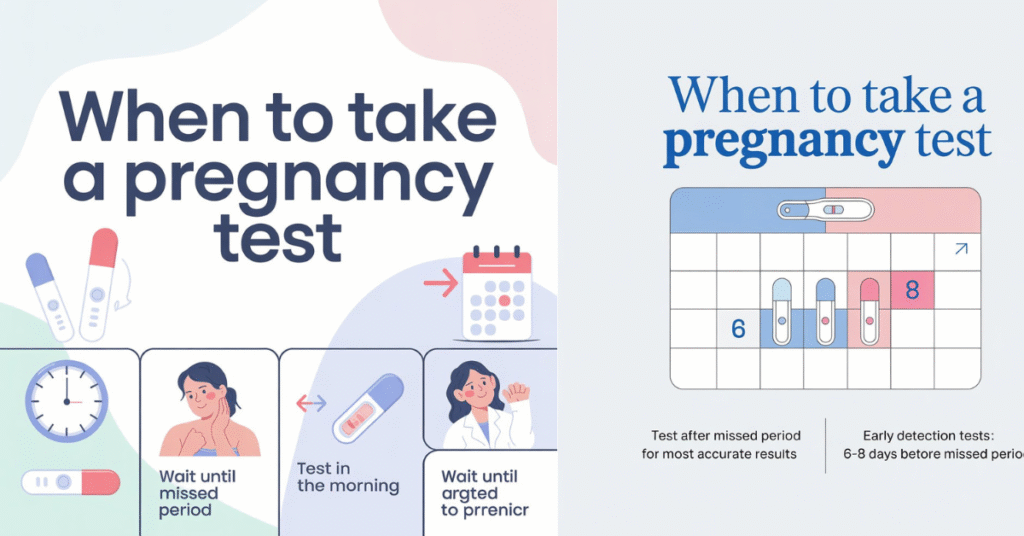
Most of the time, it taught me that not anyone actually tells you how to take a pregnancy test perfectly. Here’s what no one told me: timing is almost everything. I took the test too early, read it wrong, and spent three extra days in complete worry . So today, I want to walk you through exactly what I wish someone had told me.
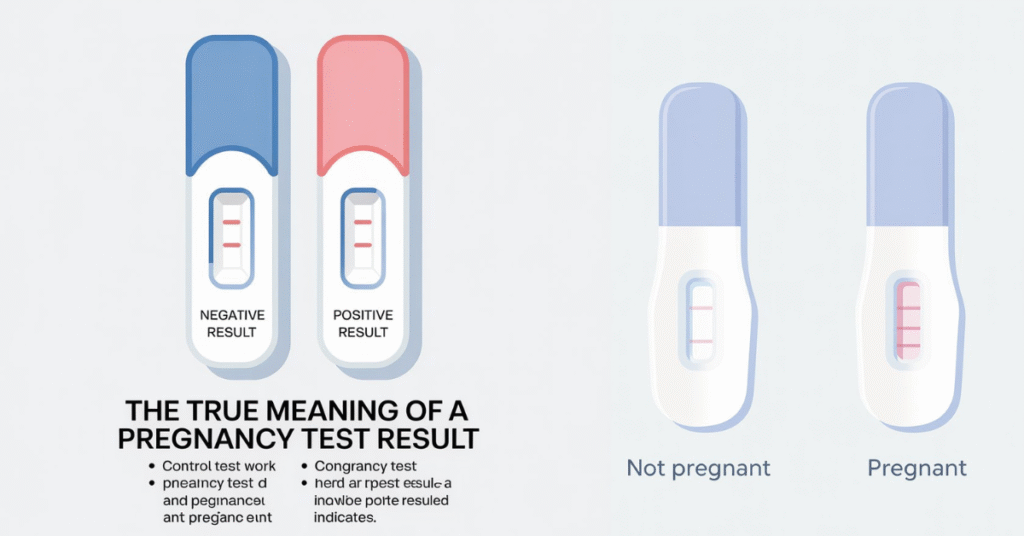
The True Meaning of a Pregnancy Test Result
A home pregnancy test reveals a hormone called hCG — human Hormone made during pregnancy. Your body starts making it right after a fertilized egg inserts itself into your uterus.
It rises fast. But here’s the thing — it takes a few days to build up enough for a test to pick it up. That’s why when you do your test, it is relevant just as much as how you test. I learned this the hard way.
Testing Too Early — What I Noticed
When I was trying to conceive Ayla, I tested four days before my expected period. The test came back negative. I cried. I was deeply upset. But guess what?
I was actually pregnant. I just tested too soon.
Here’s the science behind it: accuracy at six days before a missed period sits at only around 56%. That means nearly half of pregnant women will get a false negative at that stage. I was in that half.
Nearly 41% of pregnancy planners test at least four or more days before their expected period — and most of them face the same heartbreak I did. A negative result that isn’t actually negative.
Honestly, this surprised me too. I assumed “early result” tests meant they were accurate early. They’re more accurate early than older tests — but still far from perfect.
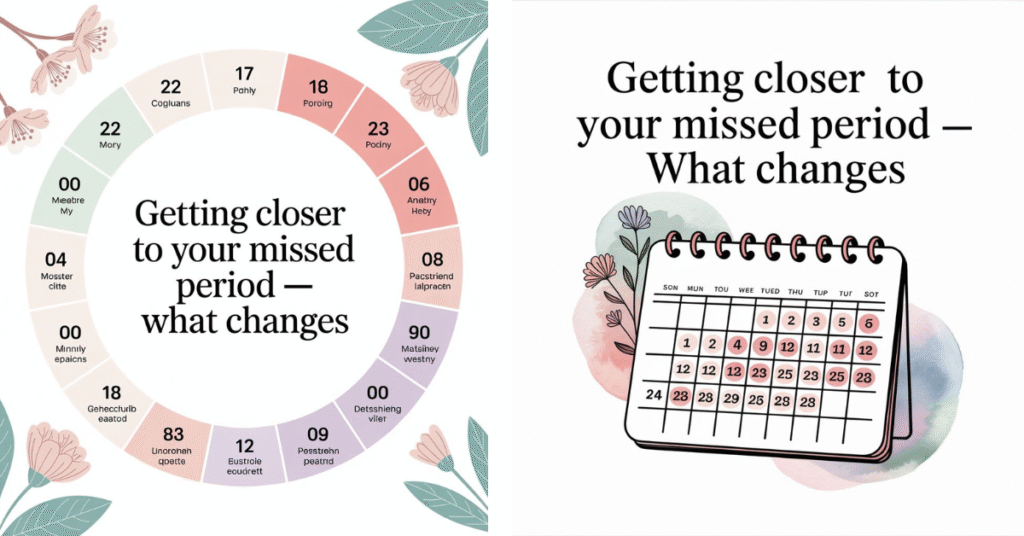
Getting Closer to Your Missed Period — What Changes
Understanding when to take a pregnancy test changes everything about your results.
As the days tick closer to your expected period, that accuracy climbs fast. Here’s how it builds:
* 5 days before — 74% accurate
* 4 days before — 84% accurate
* 3 days before — 92% accurate
* 2 days before — 97% accurate
* 1 day before — 98% accurate
* Day of missed period — 99% accurate
I’ve been there — it’s an emotionally draining wait . Every day feels like a week. But waiting even two or three extra days completely changes your result from “maybe” to “almost confident.” Let me be real with you: the only number that matters is that last one.
99% accuracy on the day of your missed period. Experts consistently say waiting until that day gives you the most reliable answer possible.
The Faint Line Problem — What Surprised Me
Okay, this one really got me. The second time I tested, I saw the faintest, tiniest second line. I almost missed it. I thought it was nothing. I almost threw the test away.
Here’s what nobody told me until I asked my doctor: any colored second line — no matter how faint — is a positive result. The color matters. If it has a hue, it’s real. You’re seeing hCG.
What you need to watch out for is something called an evaporation line. These appear after the test’s read-time window has passed. They look colorless or shiny — almost like a shadow. That’s not a positive.
That’s just the test, Shriveling. Shockingly, many women—1 in 4—misunderstand certain pregnancy test results. That’s a lot.
And it makes sense — because nobody explains the difference between a faint positive and an evaporation line clearly enough.
This one thing changed everything for me: I started reading tests only within the time window printed on the box. No peeking at old tests an hour later. Fresh read, fresh result.
What Made Me Stop Guessing & Call
I looked intensely at that faint line for what felt like an hour. Then I decided to turn on my phone and call my doctor.
That was the right call — literally. Because here’s what I didn’t know at the time: a home urine test is about 97% accurate under ideal conditions. A blood test at a clinic? Closer to 99%. And it can detect hCG even earlier than any home test can.
If you see any colored second line — even the faintest one — that’s your sign to call. Don’t Google it for two hours. Don’t ask five friends. Just call your doctor and ask for a blood test to confirm. That one phone call gave me more peace than any number of home tests ever could.
And if you’ve tested negative but your period is still late after a week? Call. Your cycle might be off, or you may have tested too early. Either way, your doctor has the answer, not another test from the drugstore.
One Thing I’d Tell Every Woman Trying to Conceive
Test on the first day when you missed a period. That’s it. That’s the secret nobody puts in big bold letters on the box.
I spoiled three days of Worry because I tested too early. Three days of Reconsidering, re-reading old tests, and Realizing myself of things that weren’t true. And all of it was realistic.
First morning urine. Missed period day. Read within the time window. These three things alone will save you so much stress.
Here’s what nobody told me until I was already through it: the test is just the beginning. The real journey starts after that second line appears. So take a breath, mama. Do it right the first time — and then let yourself feel whatever comes next.
FAQ
1. Can I test before my missed period?
You can — but accuracy is much lower. Six days before, you’re only 56% accurate. Four days before, 84%. Wait until your missed period for a 99% reliable result.
2. What does a faint line mean?
Any faint line with color means hCG was detected — that’s a positive. A colorless, shiny line after the red window is an evaporation line and means nothing.
3. Is morning urine actually necessary?
Skip it once, and you’ll understand why. Daytime urine is diluted — especially if you’ve been drinking water. The first morning is concentrated. That difference is sometimes the gap between one line and two.
4. What’s the meaning of a strip and a blood test?
Home urine tests are about 97% perfect under good conditions. A blood test done at a clinic is about 99% accurate and can detect pregnancy earlier.
5. I got a negative, but my period is late — what do I do?
This happened to me. Negative test, no period, complete confusion. I waited three more days, tested the first thing again in the morning, and got my answer. If that second test is still negative and your period isn’t coming, your doctor can run a blood test. That one is 99% accurate. No more guessing.
—
If you take one thing from this post, let it be this: wait for your missed period, use your first morning urine, and trust any line that has color. You’ve got this, mama. And whatever that test says, you’re not alone in that bathroom.
When to take a pregnancy test comes down to one answer — wait for your missed period.
With love from BabyGuideNest 💛