
Ayla said “mera dil dukha” one afternoon, and I just stopped.
Raising emotionally intelligent kids — I thought I was already doing it, reading to her, talking to her, naming things. But she’d just told me her heart hurt, at three, and I had no idea where those words came from. Had I taught her that? Did she pick it up somewhere? Had I ever actually made space for her to say something like that before?
Then I remembered the week before. She was angry about something — I can’t even remember what — and I said: “Don’t be angry.” Just like that. Like anger was a bad choice she was making. She got more upset. I got more frustrated. Nobody helped anybody. And I spent twenty minutes wondering what I was doing wrong when the answer was right there — I’d told her the feeling she was having wasn’t allowed.
What Raising Emotionally Intelligent Kids Genuinely Means
No need to become a child who doesn’t have big emotions. A child who knows what to do with them.
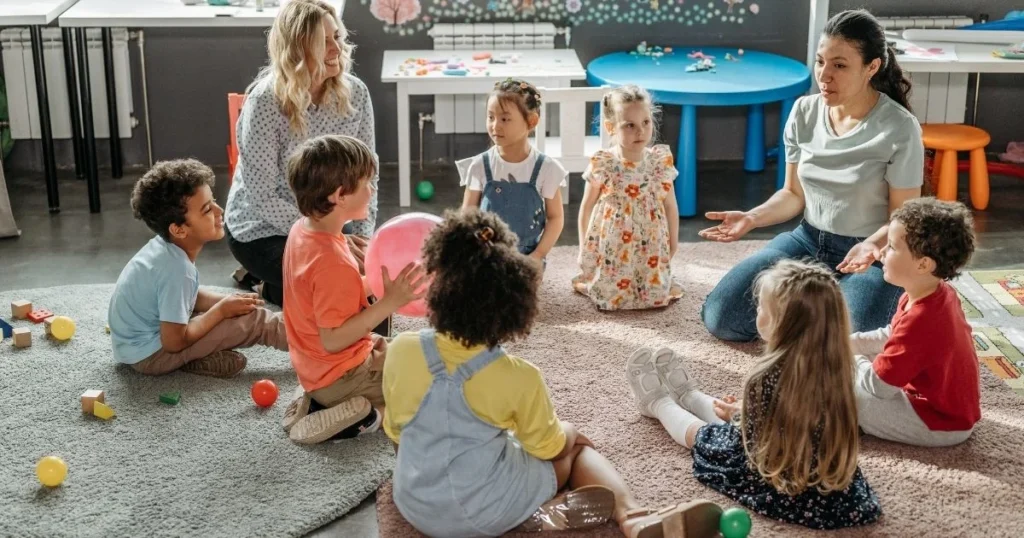
Raising emotionally intelligent kids means helping children recognize, name, and eventually move through their own feelings — not hide them, not perform them, not put them away because they’re inconvenient. Research is specific here: a child’s emotion vocabulary — how many feeling words they know and how precisely they can use them — independently predicts how well they regulate emotions. Separate from general intelligence. Separate from verbal ability. The right words for what’s happening inside — that’s the thing.
83% of parents are worried about their children’s emotional and mental health right now. 68% are asking for more support in schools. We know it matters. Most of us just don’t know where to start at home.
The Naming Problem — What I Noticed First
By two, Ayla could say sad. Sadness covered everything.
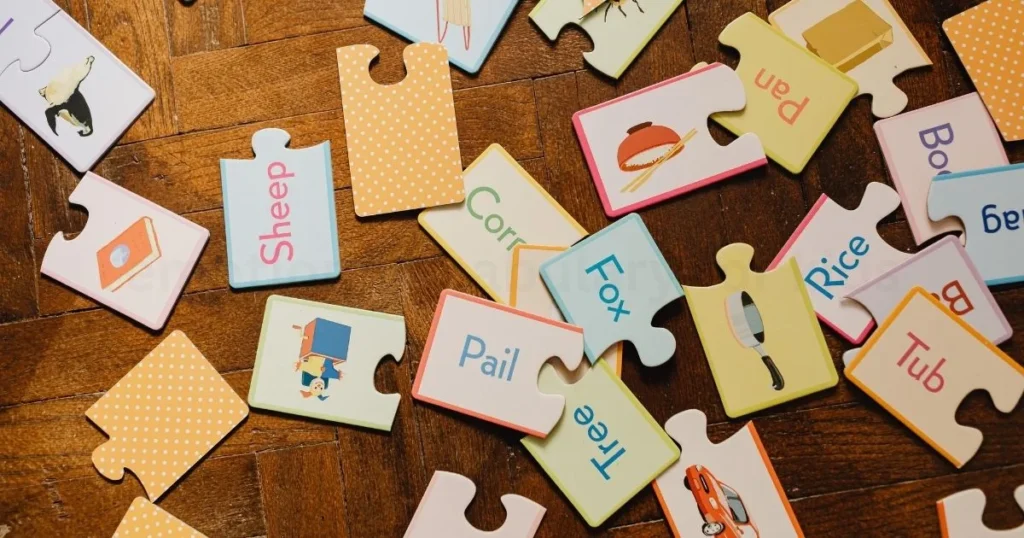
Sad when tired. Sad when disappointed. Sad when scared and didn’t have another word. Sad when frustrated. One word doing the work of five, badly. I didn’t notice how limited her emotional vocabulary was until I started actually listening to when she used it. Here’s what nobody told me — preschoolers can recognize and name basic emotions with accuracy close to adults. Happiness, sadness, fear, anger, disgust — more than 50% correct across the board. The only one they consistently miss is neutral expressions. Meaning Ayla already had more emotional recognition capacity than I was giving her credit for. What she was missing was the vocabulary to get specific about what she felt.
Mothers who used more emotion labels in everyday storytelling — not lessons, just natural conversation — had children with stronger emotion understanding six months later. That’s from a longitudinal study. Just naming feelings out loud in the flow of daily life.
I’ll try to start with my feelings first. ‘I’m feeling completely out of control because dinner is taking more time than I expected,’ I’d say out loud. In front of her. It felt strange for about three days. Then it just became how I talked.
The “Don’t Be Angry” Mistake — When Things Shifted
That week kept coming back to me.
Because I’d been doing it constantly without tracking it. “No need to be sad.” “You’re good.” “There’s nothing to be upset about.” I meant well — I actually thought I was helping her move past the feeling. What I was actually doing was teaching her that her feelings were inconvenient and she should deal with them quietly.
Child psychologist Reem Raouda, who has studied over 200 parent-child relationships, puts it directly — over-emphasising suppression of strong emotions risks raising people-pleasers prone to anxiety and unhappiness in adulthood. That’s not a small consequence. That’s the long game of “don’t be angry.” I’ve been there — watching a child escalate while you try to calm her down and not understanding that the escalation is partly because she can feel her emotion isn’t being accepted. The thing that actually worked — validate first, limit second. “I can see you’re actually in a bad mood right now. Throwing things at home isn’t okay.” Both parts. The validation isn’t permission. It’s an acknowledgment. And acknowledgment is what makes the limit something she can actually hear.
Let me be real with you — a Stanford psychologist has said the single greatest thing parents can do is become more skilled at validation. Not praise. Not consequences. Validation. It makes children more open to behavior change, not less. I had this completely backwards.
What Surprised Me Most
By age five, children already use emotional validation as a cue for who to trust. Not teenagers. Five-year-olds. Already tracking which adults in their life actually hear them, and choosing who to go to based on that. Every “you’re fine” is already shaping whether your child will come to you when something harder happens later.
Research on authoritative parenting and emotional intelligence found a correlation of r = 0.512 — the strongest of any parenting style. Authoritarian — high control, low warmth — showed a negative correlation of r = −0.347. The approach that prioritizes obedience over emotional expression actively works against emotional intelligence. Not neutral. Negative.
Honestly, this surprised me too. I thought structure and warmth were separate dials. They’re not. The most emotionally intelligent children come from homes where both exist at the same time — clear expectations and real acknowledgment living in the same house.
When to Talk to Someone
Most of this is an everyday routine — no professional needed. But some things are worth a proper conversation. If your child’s emotional reactions are considerably more extreme, more continuous, or longer-lasting than same-age peers — regularly, not just on a hard week — mention it. If emotions are disturbing school, friendships, or daily family life in ways that don’t improve. If warm, consistent parenting doesn’t seem to be touching it over time. 68% of parents are already asking schools for more emotional support. Asking for help is not a bad thing; everyone faces the same situation until they learn how to handle it.
What Actually Got Us Through It
Three things that actually shifted how we operate.
Naming my own emotions out loud. Not for her — just as a good thing I was building. “I’m feeling unable to cope because there is too much happening right now.” “That disappointed me.” She started mirroring the vocabulary within a few weeks. Not perfectly. But the words were there.
Dropping “don’t be angry” entirely. Replacing it with “I can see you’re really angry.” That’s it. No fix, no redirect immediately after. Just the acknowledgment. The Calming things that followed were faster than anything else I’d tried. Consistently.
Building emotion Word knowledge in low-pressure moments — books, stories, characters in shows. “How do you think she felt when that happened?” No importance, no pressure. The words she practiced in those conversations started showing up in real moments within months. This one thing changed everything — I stopped waiting for emotional intelligence to develop on its own and started treating it as something we were actively building together. One feeling named at a time.
FAQ
1. What does emotional intelligence actually mean for a young child?
Being able to recognize, name, and eventually move through feelings — not suppress them. Emotion vocabulary specifically predicts better regulation, independently of general intelligence. It starts with having good words for what’s going on emotionally.
2. How can I teach my child about feelings in a natural way?
Name yours first. Out loud, in everyday moments. Use emotional words when reading or talking about characters. Ask “how do you think she felt?” in a good, calming situation. The word knowledge grows through exposure, not worksheets.
3. Is it okay if my child has really exhausted emotions?
Yes — the goal isn’t smaller feelings. It’s a better tool for handling them. Validating a big emotion doesn’t make it bigger. When a child feels heard, the hard moment often passes sooner because they can process the feeling instead of getting stuck in it.
4. What’s actually wrong with saying “don’t be sad and angry”?
It teaches them that the feeling itself is wrong, not the behavior. Children whose emotions are consistently dismissed tend toward anxiety and emotional suppression — not regulation. Recognize the feeling, limit the behavior.
Ayla still says “mera dil dukha” sometimes. I still stop when she does.
Not to fix it. Not to move her past it. Just to sit there calmly for a second and say — tell me all things. That’s the whole shift. That’s what raising emotionally intelligent kids actually looks like most days. Not a curriculum. Just making space. With love from BabyGuideNest 💛
A Quick Note
If your child’s emotional reactions feel beyond what everyday parenting can address — please talk to your pediatrician. Getting support early is always better than waiting for bed experience.”
→ “bed” ko “bad” se replace karo: “waiting for a bad experience