
Speech Delay Ages 3–5: Signs, Causes & When to Act is something many parents miss — because a bright, curious child feels like proof that everything is fine.
Three people told me to wait. “She may catch up with time. Boys and girls can develop at different rates, and every child develops at their own pace.
Speech delay in kids 3 to 5 years was something I kept explaining away, partly because I wanted to believe them and partly because waiting felt easier than the alternative. Ayla was three and a half. Her speech wasn’t where it should have been, but she was bright—curious, funny, and quick to figure things out. Surely that meant the words would come on their own schedule.
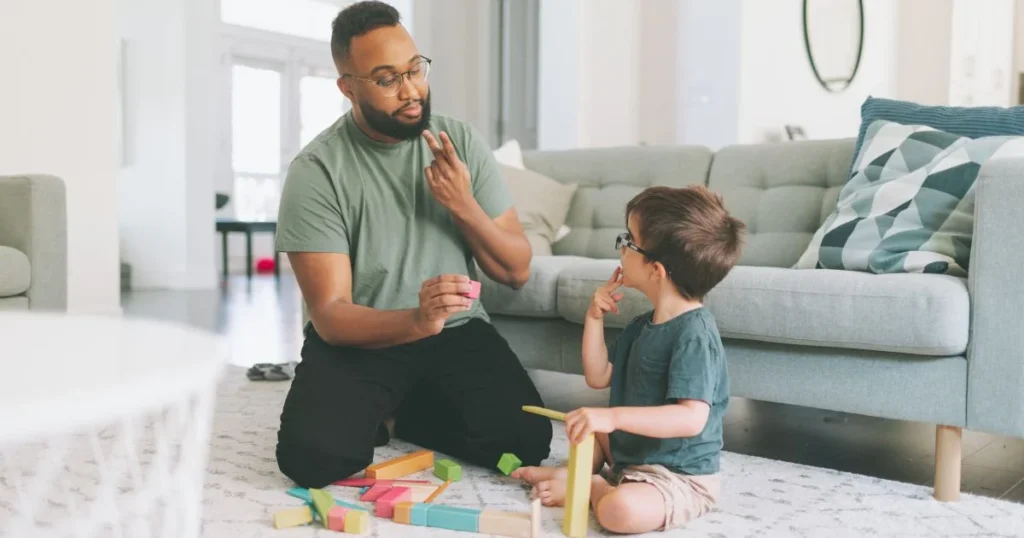
Then one afternoon she said something to me and I got it wrong. Guessed the wrong word, responded to the wrong thing. She looked at me — really looked at me — and stopped trying. Just stopped mid-sentence and walked away. I kept thinking about that moment for a long time, even though it wasn’t a big or dramatic event. Just a quiet Tuesday in the kitchen. But I’ll come back to it. I think, how many time this happened already? How many times had she stopped trying before I even realised she’d started?. That moment is why I now take speech delay ages 3-5 seriously.
That was the week I stopped waiting.
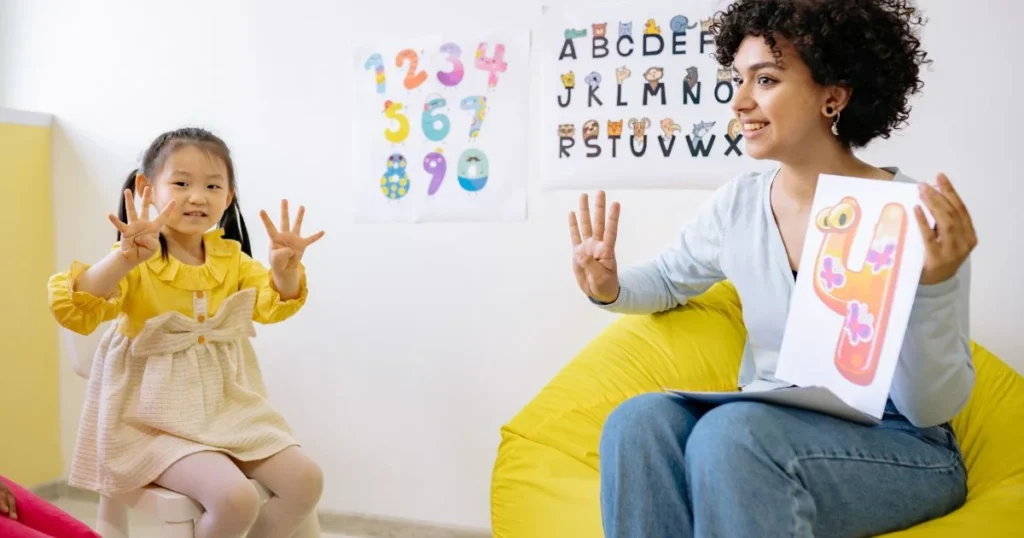
What Speech Delay in Kids 3–5 Years Actually Means
Speech delay at this age isn’t just about pronunciation. It’s about the whole picture — understanding, vocabulary, grammar, sentence length, social communication, and the ability to be understood by people outside the family.
Speech delay in kids ages 3 to 5 years affects somewhere between 5% and 8% of preschoolers globally, though estimates range widely — from 2.3% to 19% depending on age range and how delay is defined. In the US, preschool language delay prevalence sits around 8% to 12%. A 2025 screening study in Madrid found 19.7% of children identified with language difficulties — boys at 13.3%, girls at 6.4%.
Here’s what nobody told me — untreated speech and language delay persists into school years in 40% to 60% of cases. Not a small number. Not a rare outcome. Nearly half of children with preschool speech delay who don’t get support carry it forward. That statistic is the reason “wait and see” after age 3 is no longer recommended.
Age 3 — What I Noticed
At three, Ayla’s speech was inconsistent in a way I kept explaining away.
Some days she was chatty and clear. Other days she was frustrated before she’d even finished the sentence — like the gap between what she wanted to say and what came out was already exhausting her. She repeated syllables sometimes. Lost words mid-sentence. Strangers couldn’t follow her the way I could.
The CDC milestone for 4-year-olds is visible — sentences of 4 or more words, ability to answer basic knowledge “who, what, where, why” questions, and discussion of daily activities. Those targets were inconsistent for Ayla at 3, which meant they needed to be solid before 4.
Here’s what nobody told me — I was speaking for her. Constantly. She would begin saying or doing something, and I would finish it for her. Sometimes, I would interrupt and answer before she could finish speaking. I believed I was helping her. I was actually removing her need to try. One of the most common and most damaging mistakes parents make — and I was doing it dozens of times a day without realising it. Speech delay ages 3-5 often looks like this: inconsistent, not obvious.
Age 3.5 to 4 — When Things Shifted
The kitchen moment changed how I was watching things.
I started actually listening differently — not for what I thought she was saying, but for what was happening when she couldn’t get it out. The repetitions. The pauses. The moments she simplified what she was trying to say because the full version was too hard. She was working around her own speech in ways I hadn’t noticed because I was always filling in the gaps for her.
I’ve been there — convincing yourself that understanding your child better than anyone else means everything is fine. It doesn’t. It sometimes means you’ve gotten so good at compensating that you’ve stopped seeing the actual gap.
I took her for a hearing assessment first. This matters. Hearing loss is one of the most common and most missed contributors to speech delay, and it can look exactly like a speech problem with no obvious hearing symptoms. Ruling it out — or finding it and treating it — is step one before anything else.
Let me be real with you — 40% to 60% of untreated preschool speech delay persists into school years. By the time a child starts school with Mumbling, not fully developed sentences, and difficulty being understood, they’re already behind on reading readiness, classroom participation, and peer relationships. Early matters here. Genuinely.
What Surprised Me Most
Two things from the research genuinely stopped me.
First — bilingual children use the same referral criteria as monolingual children. Bilingual exposure alone does not justify delaying evaluation. I had been told — by more than one person — that Ayla’s bilingual environment was probably the cause and we should just wait it out. That’s not completely good. A two-language child who isn’t meeting language milestones in either language needs the same checking as any other child. Both facts changed how I saw speech delay ages 3-5.

Second — speech delay can occur with completely normal intelligence. The list of associated factors includes hearing loss, autism, prematurity, low birth weight, Down syndrome, Fragile X syndrome, and family history. But it can also occur without any of those — and a bright, engaged, clearly intelligent child can still have a speech or language delay that needs support. Intelligence doesn’t cancel it out.
Honestly, this surprised me too. I had used Ayla’s obvious intelligence as a reason to wait. Turns out those two things have nothing to do with each other.
When to Talk to Someone About Speech Delay Ages 3-5
The “wait and see” approach has a cutoff. That cutoff is age 2 for most concerns — and definitely by 3. Talk to your child’s doctor if, by age 3, their speech is still hard for people outside the family to understand, if they’re not yet combining words, or if they seem to be losing words they once knew. Trust your gut, too — if something feels off, it’s worth raising, even if you can’t quite explain why.
From there, your doctor will usually refer you to a speech-language pathologist. It’s also worth asking about a hearing check, since hearing and speech are closely linked but assessed separately — and both are important to rule out.
The encouraging part: early intervention really does make a difference. In one study, 71% of preschoolers who got school-based speech-language support saw real, meaningful progress. That’s not a small number — it’s a strong reason not to wait and see.
Don’t assume preschool attendance means the delay is being addressed. It might not be. And don’t stop therapy after early improvement without a professional review — regression is real, and ending support too soon is one of the most common mistakes parents make.
Speech Delay Ages 3-5: What Actually Helped Us
Once I recognized every speech delay ages 3-5 sign we’d been explaining
away, acting on it made all the difference.
The hearing test first. Always first. Rule that out before anything else.
Then the things that made a real difference at home — not pressure, not drilling, not making speech practice feel like a test. Shared book reading where I named things and waited for her to name them back. Turn-taking games that built conversation rhythm. Songs and rhyming activities — rhyming specifically helps with phonological awareness in a way that feels like play and works like therapy.
The shift from correcting to modelling was the single most useful thing I changed. Instead of “no, it’s not wabbit, it’s rabbit” — I just said “yes, the rabbit” naturally in response, using the correct form without drawing attention to the error. That approach is what speech-language pathologists recommend — model the correct word, don’t pressure repetition, let the correct version land without the shame of correction.
This one thing changed everything — I stopped finishing her sentences and started waiting. Genuinely waiting. Three to five seconds of actual silence before stepping in. It felt uncomfortable. She started filling that silence with more attempts, more words, more trying. The space I left behind was the space that she actually needed.
Speech Delay Ages 3-5 FAQs
1. What should a 3-to-4-year-old be able to say?
By the time most kids hit 4, their sentences get longer — four words, sometimes more, strung together without much effort. They’ll answer the basics too: who, what, where, why. Nothing too abstract, but enough that a conversation actually goes somewhere.
Here’s the real test, though. Can a stranger — someone who’s never spent five minutes with your kid — understand what they’re saying? Not everything, necessarily. But most of it, most of the time.
If your child is between 3.5 and 4 and that’s just… not happening yet, or it’s hit or miss, it’s worth getting them checked out. Not because something’s definitely wrong. Just because early evaluations tend to catch things while they’re still easy to fix.
2. Is my child’s speech delay because we speak two languages at home?
Bilingual exposure alone is not a cause of speech delay and doesn’t justify delaying evaluation. Bilingual children use the same referral criteria as monolingual children. If milestones aren’t being met in either language — get an assessment regardless.
3. Will my child just catch up on their own?
Some children do. But 40% to 60% of untreated preschool speech delay persists into school years. By the time concerns are obvious in a school setting, the child has already been behind for years. Waiting until school age to address everything that could have been helped at 3 or 4 costs more than it saves.
4. What can I do at home at that time right now?
Read together daily and name things out loud. Use turn-taking games that require response. Sing songs and do rhyming activities. Model correct words naturally without pressuring repetition. Stop finishing their sentences — leave space and wait. Short, daily activities beat occasional intensive practice every time.
5. When should I stop speech therapy?
Not without a professional review. Early improvement doesn’t mean the work is done — and ending therapy before a speech-language pathologist confirms readiness is one of the most common reasons children need to restart later. Let the professional make that call, not the progress you can see.
This is the simplest check for speech delay ages 3-5.
I wish I hadn’t waited. That’s the honest version of how this story goes.
Not because the outcome was extremely serious — it wasn’t. But because the months I spent being reassured by “wait and see” were months Ayla could have had support she actually needed. The kitchen moment that finally moved me was the same kind of moment that had probably been happening for a while. I just hadn’t been watching carefully enough to see it.
You don’t have to wait to be sure. Getting an assessment and finding out everything is fine is a better outcome than waiting and finding out it wasn’t.
With love from BabyGuideNest 💛
A Quick Note
Just a mom here, not a speech-language pathologist or audiologist. All the things that I discuss in this post come from my own experience and research I’ve read. If you have any concerns about your child’s speech or language — please talk to your paediatrician. An assessment costs nothing compared to what delayed support can cost later.