
My youngest once lay flat on the supermarket floor because I picked up the wrong flavor of chips. Toddler tantrums — I’ve done two full rounds of them now, one child at a time, and the second round did not get easier just because I’d survived the first. My oldest was a calm toddler. My youngest had very strong opinions about everything, delivered loudly, usually in public, usually on a floor.
The worst day was when both of them melted down at the same time. One was crying over a toy, the other over screen time. I stood in the middle of the living room with noise coming from both sides and honestly thought about sitting down and joining them. Ten years and two very different kids later, here’s what I know: tantrums aren’t a parenting failure. They’re a stage. And knowing what’s actually happening makes it much easier to get through.

What Toddler Tantrums Actually Mean
Not manipulation. Not bad behavior. A brain that isn’t finished yet. A tantrum actually happens when a child feels more than they can manage. The brain part who handles emotional control is one of the last to develop, so a two-year-old toddler doesn’t have the tools yet. When he loses it over the wrong cup, he is not starting drama. He is overwhelmed.
87% of children during the age of 18 to 24 months have tantrums. 91% at 30 to 36 months. Even at 42 to 48 months, 59% still do. That’s not a few unlucky families. That’s nearly everyone. A 2025 study found 54.5% of toddlers had temper tantrums, and 20% of two-year-olds had one every day. Gender, race and background made no real difference.
Children’s Mercy calls tantrums part of healthy growth: a child learning to say “I want to do it myself” before they have the words. They can show up from 12 months and last till around age 5, with the peak between 2 and 3. Here’s what nobody told me — tantrums can start as early as 12 months. Not at two, like everyone says.
My youngest started around 14 months and I spent weeks convinced something was wrong. Many toddlers normally have one tantrum a day. The good news? Most don’t last very long. The regular tantrum is only about 3 minutes, and around 75% are over within 5 minutes. It may feel like it’s going on forever while you’re in the middle of it, but it usually passes much sooner than it feels.
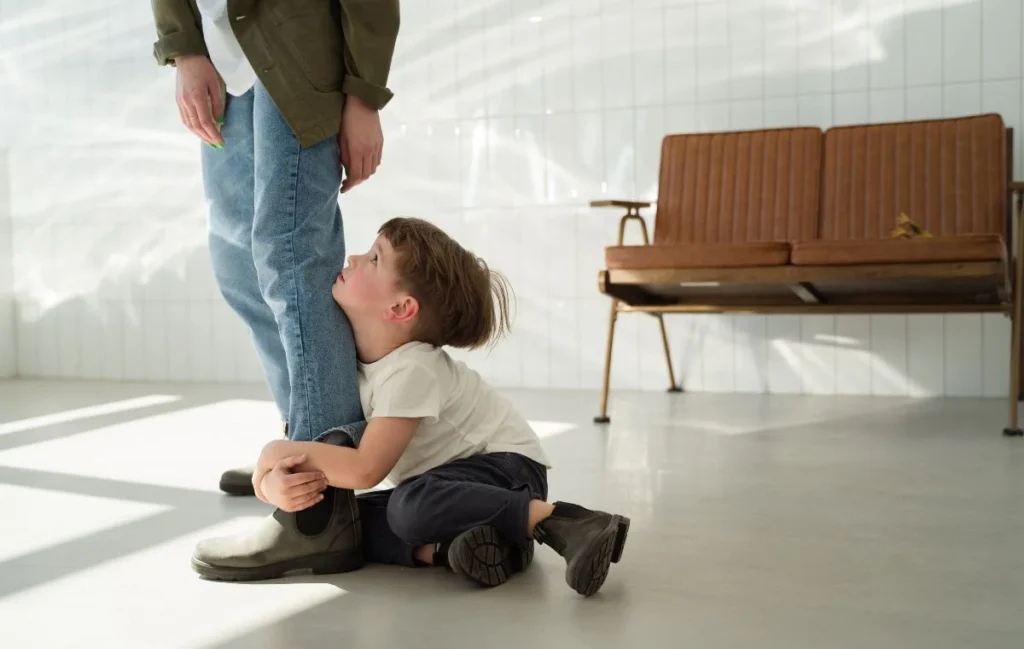
18 Months to 2 Years — What I Noticed
With my first child, this stage was mild. I thought I’d figured parenting out. I hadn’t. I’d just been given an easy baby. My second one threw himself at 18 months over a sock that felt wrong, a song that ended too soon, a spoon that was the wrong color. After three weeks of daily meltdowns I started writing down what happened before each one.
The pattern showed up fast. Hunger. Tiredness. Too much noise. And transitions — leaving the park, stopping a game, switching activities. The thing he screamed about was never the real reason. Here’s what nobody told me — around 29% of tantrums are linked to the parent-child relationship, not only the child’s temperament his got longer.
When I stayed truly calm, they peaked and dropped faster. I’ve been there — standing in the kitchen at 5pm wondering why a tiny thing caused such a huge reaction. The tiny thing is never the cause. The tired, hungry, overloaded child is.

2 to 3 Years — When Things Got Exhausted
This is peak territory. 20% of 2-year-olds have a tantrum every single day, and mine was one of them. Sometimes twice. The public ones were hardest, not because they were worse but because of the audience. The stares. The strangers with advice. The feeling that everyone watching knew a better way.
Let me be real with you — the most useless thing during a peak tantrum is a long explanation. The thinking part of his brain was offline. Words didn’t reach him. What reached him was my tone, my body, and how calm I actually was. I said one short thing — “I can see you’re really upset” — and then waited. Just wait. That pause, without adding pressure, shortened the episodes more than anything I’d said before.
My biggest mistake at this stage was inconsistency. One day, I’d hold my boundary, even when it was exhausting for me. Rules that change with my energy level teach a child to test harder, because he never knows.
Public tantrums were their own category. Supermarkets, restaurants, the park. The hardest moments usually came when I was rushing and already feeling embarrassed. I learned that moving him to a peaceful place, keeping me calm and neutral, and simply leaving the errand unfinished when necessary worked much better. The crowd matters far less than it feels like.

What Surprised Me Most
Two things caught me off guard with my second child.
First — mood returns to normal in different episodes. Every time. He could be inconsolable for ten minutes and then happily ask for a snack as if nothing had happened. He moved on instantly. I was still shaky. Children don’t carry a tantrum the way adults do. Tantrums also get a little longer as kids grow, but they happen less often. That’s why a 4-year-old’s tantrum can feel very big even though they happen far less often.
Second — About 5 to 7% of children aged 1 to 3 have tantrums that last 15 minutes or more, three or more times a week. That’s a small group, and it’s the one worth watching more closely., and it’s the one worth watching more closely. Mine never reached it, but knowing the line exists helped me know what to look for.
Honestly, this surprised me too. I thought all tantrums were the same thing at different volumes. They aren’t. Most are plain development. A few point to something underneath — poor sleep, sensory sensitivity, a language delay, anxiety. This one thing changed everything — I stopped treating every tantrum the same and started noticing patterns. When, how long, how often, what the recovery looked like. That information was more useful than any reaction I’d had.
How We Handled Tantrums, Step by Step
This is roughly what worked in our house. It didn’t work every time, and some days I forgot all of it. But when I stuck with it, the tantrums got shorter.
1.Check that he’s safe. If he is crying on the floor without any reason, nothing is urgent. If he’s kicking or throwing things, I quietly move him or the stuff. No lecture, because she can’t hear one anyway.
2. First I need to relax and calm down. Lower the pitch of your voice, set down and crouched to his level. It sounds small, but kids pick up the mood in the room. Thornburg Wellness says the same thing: a parent keeping their own emotions in check is where it starts.
3. Name what’s happening, briefly. “You’re really upset.” That’s all. It tells him the feeling is real and he’s allowed to have it.
4.Don’t give in. This was the hardest thing for me. He’d scream for the chips, and part of me just wanted the noise to stop. But when you give in, he’ll try it again tomorrow. StatPearls (2026) write the same thing: stay calm, don’t engage while he’s safe, distract if you can, then praise him when it’s over.
5. Stay close and wait. I used to try reasoning with him mid-scream. Waste of breath. Now I just sit nearby. Most of the time it’s over in about three minutes.
6. Reconnect afterwards. Once he’s calm, a hug and one sentence. “That was hard, and you calmed yourself down.” This is where he actually learns something.
https://kidshealth.org/en/parents/toddler-tantrums.htmlKidsHealth gives similar advice: stay calm, keep your child safe, reduce stimulation, and praise good coping.
Mistakes I Made
Plenty. I offered five choices when he could only handle one. I punished him after he’d calmed down, and she had no idea what it was for. I decided some tantrums were on purpose when he was simply tired. And I compared him to his brother, which helped nobody.
When to Talk to Your Pediatrician
Many tantrums like that do not need the doctor. Call if they regularly go on for 15 minutes or more, happen three or more times a week, involve really hurting himself or others, or seem much worse than other kids his age.
Also call if they’re getting worse as he nears four, instead of settling down. Before that, check the boring stuff. Hungry? Thirsty? Tired? In pain, coming down with something, overstimulated? Parents miss these all the time, me included. My youngest’s worst tantrums always came after a late nap or when his favorite food isn’t on the plate.
And if his wording is behind and the tantrums are frequent and hard, mention that too. A child who can’t tell you what he needs only has big emotions left. Speech support often helps the tantrums as well.
What Actually Helped Us
Writing down what set him off. I jotted the time and what happened just before. After three weeks I could see he fell apart around 4pm and whenever the screen went off. A snack and a five-minute warning stopped about half of them.
Agreeing on rules with my husband. Calmly, beforehand, never in the middle of a tantrum. The longest ones were always the ones where he could tell we disagreed.
Fixing the basics. An earlier nap, a snack before the shop, a quiet half hour before leaving the house. Boring, and it beat every technique I tried.
Telling him what he did right afterwards. “You were so upset and you calmed yourself down.” telling him loudly seems to teach it better than waiting for him to understand the things.
FAQ
1. Why does my toddler lose it over everything?
Very. About 91% of kids between 30 and 36 months have them. Their brains just can’t handle big feelings yet. I’d only worry if they’re entirely long, very continuously, or he’s hurting himself.
2. How long do tantrums last?
Usually about three minutes. Three out of four are over within five. If they regularly run past 15 minutes, mention it to your pediatrician.
3. Do I just ignore the tantrum?
Mostly yes. If he’s safe, I just stay nearby, keep quiet and wait. The only time I stepped in was when he might hurt himself or something else. And I never gave him what he was screaming for. That part was hard.
4. What sets tantrums off most?
Hunger, tiredness, too much noise or stimulation, switching from one activity to another, and not having the words for what he wants. Usually it’s a few of these piled together.
5. Does giving in make tantrums worse?
Yes. If screaming gets him the thing, he’ll scream next time too. Hold the limit, and be kind about it.
6. When do tantrums stop?
Slowly, and not on any one day. As he learns to say what he wants, they get fewer. About 1 in 5 two-year-olds has one every day. By four it’s closer to 1 in 10.
7. Why is his meltdown different from a normal tantrum?
If a calm “no” works, it’s a tantrum. If nothing works and he just needs quiet, it’s a meltdown. If you see a lot of meltdowns, mention it to your pediatrician.
My youngest still has his moments. Less floor now, more very strong opinions. My oldest barely remembers the supermarket phase at all. We all got through it, and you will too, even on the days it doesn’t feel like it. On the hard days, these positive parenting affirmations can help.
With love from BabyGuideNest 💛
A Quick Note
I’m Hafiza Sumaira, a mom of two, not a doctor or child psychologist. Everything here comes from my own experience and the research I’ve read. If your child’s tantrums are severe, very frequent, or just worrying you, please talk to your pediatrician.