
A Potty training guide only works when it starts at the right moment — the
moment the child is ready, not when the calendar or the pressure says it’s time.
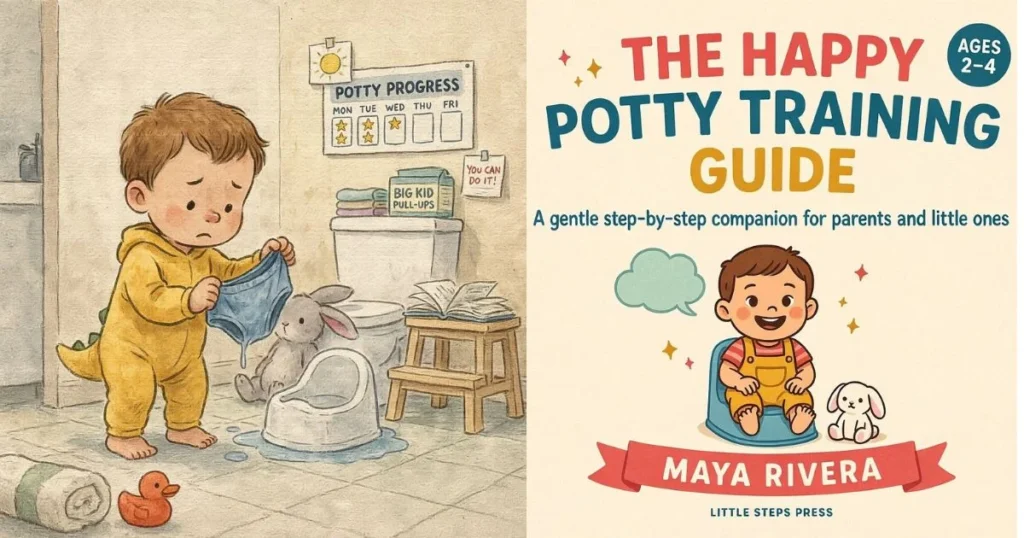
I started potty training Ayla at 18 months because someone told me early was better. Potty training at 18 months looked like this — me enthusiastic, Ayla completely unbothered, three weeks of going nowhere, and both of us more stressed than when we started. She wasn’t ready. I wasn’t listening to that. By week four I quietly put the potty back under the sink, and we didn’t talk about it again for four months.
Then, around 2.5 years in, she started telling me when she needed to go. Grabbing her nappy. Hiding behind the sofa to poop. All the signs I should have been waiting for. We started again. It worked within two weeks.

Then she regressed. Two weeks after starting nursery — accidents everywhere, asking for nappies back, acting as if we’d never trained at all. I sat on the bathroom floor one afternoon thinking: did I imagine the two weeks where this worked? I had not imagined them. Regression after seeming fully trained happens to around 33% of children. I just hadn’t known that going in.
What Potty Training Actually Means:
Not a milestone with a deadline. A readiness-based process. Potty training works when the child is ready — not when the parent decides it’s time or when a certain age ticks over on the calendar. The AAP puts the typical training window between ages 2 and 3, with most children bladder- and bowel-trained by 4. But 61% of children are trained by 2.5 years in 2025 data — down from 95% in 2004. That’s a significant shift. Children are taking longer now, and that’s not necessarily a problem.
Here’s what nobody told me — starting before a child shows readiness signs doesn’t make training faster. It makes it longer. The child who isn’t ready yet will resist, which extends the whole process in ways that waiting another two months wouldn’t have.
The Readiness Signs — What I Noticed Second Time Around
The difference between 18 months and 2.5 years was completely obvious in hindsight.
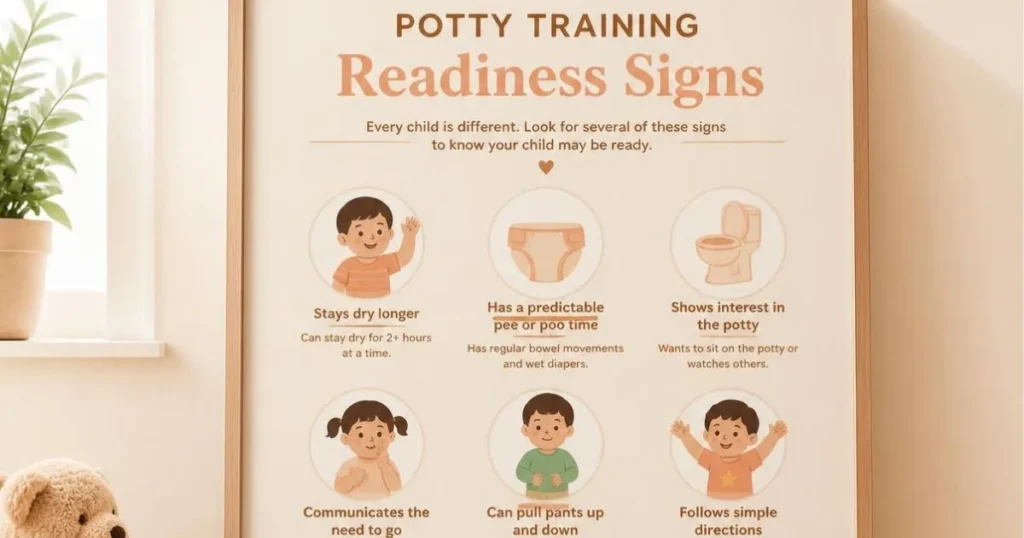
At 2.5, Ayla was hiding to poop. Telling me before she needed to go rather than after. Showing interest in the toilet, wanting to copy what she saw. Staying dry for longer stretches. These are the real readiness signs — and none of them were present at 18 months when I’d started the first time.
Here’s what nobody told me — 31% of parents cite child non-cooperation as their biggest training difficulty. Most of that non-cooperation is actually a premature start. If a child isn’t developmentally ready, they may resist, refuse, and turn every session into a struggle. That doesn’t mean they’re being stubborn. That’s a child whose body and brain haven’t connected the relevant signals yet.
I also hadn’t understood the constipation link. Ayla was slightly constipated during our first attempt, and I hadn’t connected it to the training struggle at all. Constipation is the number one hidden physical cause of training problems and poop refusal. One painful bowel movement can start a frustrating pattern. The child remembers the pain, begins holding their poop, and then becomes more constipated. The harder stool causes more pain, and toilet training gets harder with each attempt.
The Poop Problem — When Things Got Hard
Ayla cracked pee within a week the second time. Poop was a completely different situation. She would come to me and ask for a nappy specifically to poop in. Then she’d go behind the sofa. Same corner, every time. I found this both impressive and baffling. She clearly knew she needed to go. She clearly did not want to do it on the toilet. I’ve been there — a child who is technically capable of using the toilet and has simply decided this one specific thing is not happening on it. The pediatrician mentioned something I hadn’t considered — poop withholding driven by fear. The toilet is loud. The seat is big. Pooping feels different sitting up on a hard surface than crouching behind furniture. These are real sensory and anxiety factors that around 20% of children experience during training. Addressing the specific fear — getting a smaller insert, letting her flush on her own terms, not making the bathroom feel high-stakes — shifted things within a week.
Let me be real with you — 8% of children develop constipation or encopresis during training. If poop refusal is lasting more than a few weeks, that’s worth mentioning to the pediatrician before it becomes a longer-standing problem.
The Regression — What Surprised Me Most
Two weeks after nursery started, we were back in nappies. This is the part nobody prepares you for. You think training is done. You’ve told everyone it’s done. And then a big change — a new baby, a house move, starting nursery — and suddenly it’s not done anymore.
33% of children regress after seeming fully trained. That’s one in three. And 17% of parents struggle specifically with home-daycare coordination — different toilets, different routines, different expectations across environments that the toddler has to navigate simultaneously.
Honestly, this surprised me too. I had thought once trained, trained. It’s not a permanent state. It’s a skill that can wobble when the child’s world changes significantly. The response isn’t punishment or pressure — it’s going back to basics calmly and consistently, exactly as if restarting, without communicating that something has gone wrong.
This one thing changed everything — I stopped treating the regression as a failure and started treating it as information. Something had destabilised Ayla’s confidence. Once we found the underlying issue and dealt with it, toilet training became much easier than it had been with any method we tried.
When to discuss with your child’s doctor:
In many cases, the biggest factors are simply timing and the way potty training is introduced. Some need medical eyes. Talk to your pediatrician if resistance continues past age 4 — that’s the threshold where physical or emotional factors are more likely to be playing a role. Talk to them if constipation is clearly present — hard stools, pain during pooping, going infrequently — because treating constipation is a prerequisite for training, not something to address afterward. Talk to them if poop withholding has been going on for weeks and doesn’t respond to gentle intervention.
Also worth mentioning — 7% of children start school still in nappies full-time in 2025 data. If your child is approaching school age and training hasn’t happened despite genuine effort, that’s a conversation to have with your doctor before school starts, not after.
What Actually Helped Us:
Every potty training guide I read missed the same thing — readiness, not age,
was the real starting point.
Three things that made the real difference — second time around.
Waiting for actual readiness signs. Not age. Not other children’s timelines. The specific signals — staying dry for stretches, communicating before rather than after, interest in the toilet, hiding to poop. When all the available signs you see, time to start . When they weren’t, we didn’t. The patience was hard. The result was faster.
Addressing the poop fear directly. Smaller insert for the toilet seat. Letting her practice flushing when she wasn’t using the toilet so it became less alarming. Not hovering anxiously in the bathroom while she was trying. The low-stakes environment mattered more than any reward chart.
Treating regression as a reset, not a failure. Back to basics. Same language, same routine, same calm. No commentary about what had worked before. Just restarting without the weight of expectation. She trained again in about ten days.
FAQ:
1. My toddler keeps refusing to use the potty — what’s happening?
Usually either not ready yet or there’s a specific fear or physical factor like constipation. If refusal is consistent and nothing is changing, check for constipation first — it’s the most commonly missed physical reason — and consider whether the specific fear about the toilet (noise, size, sensation) needs addressing directly.
2. My child seemed trained and then completely regressed — is this normal?
Yes — and more commonly than anyone warns you. Big transitions do this. The nursery did it for us. The training wasn’t gone, just temporarily disrupted. Start again from scratch, same calm routine, no commentary about what worked before. She’ll get back there. normally faster than the first time.
3. What are the really readiness signs I should be waiting for?
Staying dry for at least two hours at a stretch, communicating before they need to go rather than after, showing interest in the toilet, hiding to poop, and being able to follow simple instructions. Most of these appear somewhere between 2 and 3 years, but the timing varies significantly.
4. My child does pee on the toilet but refuses to poop there — why?
The sofa corner made more sense to her than the toilet did — physically and emotionally. Pooping takes more effort, more vulnerability, more trust in the surface underneath. We got a smaller insert. I stopped standing in the doorway watching. Constipation check — clear. After two weeks she figured it out actually. If yours has been refusing for a while and nothing is changing — bring it up with your doctor before it becomes a longer pattern.
5. When should I actually worry about potty training progress?
If resistance continues past age 4, constipation is clearly present and isn’t resolving, or there’s no progress despite consistent effort — talk to your pediatrician. Most children are fully trained by 4, but some need specific support to get there.
———
The 18-month attempt taught me what readiness isn’t. The 2.5-year attempt taught me what it is. The regression taught me it’s not a one-time event. Train when she’s ready. Address the poop fear directly. And when regression happens — and it might — restart without the weight of everything that came before.
With love from BabyGuideNest 💛
A Quick Note
I am a mom who faces all these things in my life, not a child doctor or child specialist. All the details I post come from my own experience with Ayla and research I’ve read. If potty training isn’t progressing despite genuine effort, or constipation seems to be a factor — please talk to your pediatrician. Some training struggles need professional support, not just better timing.