
An hour. That’s how long my son once sat at the table fighting me over four lines of homework. Four lines! Then one evening I got tired and said, “Finish this, and you pick tonight’s movie,” and he was done in ten minutes. Same pencil, same worksheet, same kid. That night I typed “ADHD in children” into Google, and my tea went cold while I read.
I wasn’t after a label, ok? I just wanted to know why a boy so smart and so funny could look totally stuck at 5 pm and then fly through everything at 5:20. And no, I’m not saying he has ADHD. A doctor decides that, not me and definitely not Google. But what I read about ADHD in children changed how we do homework, so here we are.
Quick intro, since I’m a mom of two, 10 and 6. The little one has opinions on everything (once lay flat on a supermarket floor over the wrong chips, you may have heard).
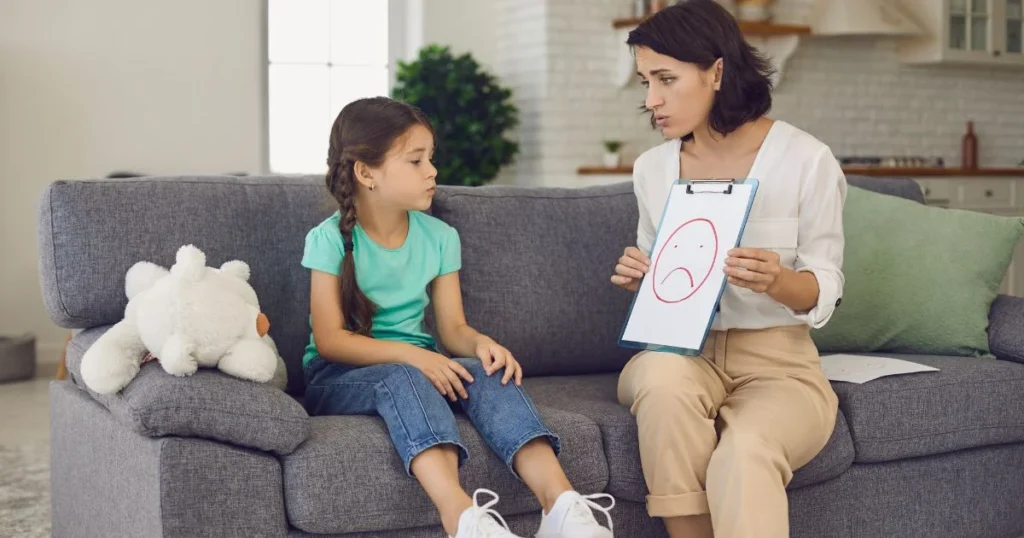
ADHD in Children Isn’t What I Thought It Was
I used to think ADHD was the kid bouncing off the walls. Then I met a kid who sat perfectly still at the table and still couldn’t begin. That’s an executive function, which is a fancy way of saying planning, organizing, and getting started. My son can do the math in his head. Getting the pencil moving is the hard part. I’d watched this happen for months and called it stubbornness, which, sorry, buddy.
Then the numbers. According to CDC data from 2022, about 11.4% of children aged 3 to 17 in the US have ever been diagnosed with ADHD, which is around 7 million children. About 10.5% have it now. Boys are diagnosed more often than girls, about 15% compared with 8%. And the numbers have gone up since 2016, when it was 9.9%. I read that twice. ADHD in children is far more common than most of us assume, which is exactly why it gets misread so often.
Ages 3 to 5: When Wiggly Is Just Wiggly
All preschoolers wiggle. Mine did, yours does, it’s fine. ADHD in children this young is hard to spot, because ordinary preschool energy looks so similar.
What matters is how constant it is. Constant means everywhere: home, grandma’s house, the park, the mosque. Not just one bad day.
But a hungry four-year-old and a tired four-year-old can look the same, so please don’t panic. I kept a scrappy list of when the bad moments happened. Same times of day, mostly, and a snack fixed more than I expected.
Ages 6 to 9: Where Homework Falls Apart
School is where it shows. Long hours at a desk, a strict timetable, and one teacher for 25 kids.
This was our homework era. He’d stall. He did everything except the homework. Tidied his pencil case, asked what’s for dinner, counted the tiles on the floor. Then the movie deal, and he’s done before the popcorn is ready. Relieved? Yes. A little annoyed? Also yes.
Here’s what I figured out later. Lots of kids with ADHD struggle to start boring things but can focus well on stuff that feels interesting or rewarding. Of course, plenty of regular kids also work harder for a treat, so it proves nothing by itself.
But it told me his problem wasn’t “can’t do it.” It was “can’t start it,” and that needs a totally different fix. Many families find after-school hours the hardest part of the day. I laughed out loud. 4 pm is when my house falls apart. Every other mom I know says the same: homework fights, kids who won’t listen, chores, backchat, rough mornings, rougher bedtimes.
Ages 10 and Up: The Kids Nobody Notices
Some kids are easy to miss. The child no teacher would ever mention may be quietly struggling. ADHD in children doesn’t always look like the loud, bouncing kid we picture.
That’s the catch, though. Girls often show the inattentive side, the daydreaming, the lost shoes, the drifting off mid-sentence, so they can go years without a diagnosis. Good grades hide it too. A kid can work twice as hard as everyone else just to keep up; the report card looks lovely, and the house falls apart at 6 pm.
Emotions play a part as well. Emotional dysregulation isn’t an official DSM-5 criterion, but it’s really common. These kids can feel a few big things at once and can’t easily pull their attention away from them. One broken crayon and the afternoon is over.
Sleep. I didn’t see that one coming. Apparently a lot of kids with ADHD struggle to sleep, somewhere between 25% and 85%. Other kids have it too, around 20 to 30%, so it’s not a clear sign on its own. But a tired kid looks so much like an ADHD kid that the doctor needs to know. And if he’s not sleeping, none of the rest works anyway.
Other Things That Can Go With ADHD
ADHD rarely travels alone. In a 2022 CDC survey, nearly 78% of children with ADHD had at least one other condition, such as anxiety, behavior problems or learning difficulties.
When to Talk to Your Pediatrician
I almost waited. I kept telling myself it’s a phase; he’s only six. Book the appointment if this has gone on for months, it shows up at home and at school, and it’s getting in the way of learning, friendships, or family life.
If your child seems upset about it, or sleep is bad most nights, that’s another reason to call. Early is better here. It takes pressure off your child and off everyone else at home too. Your regular pediatrician can start the conversation at a normal visit, so you don’t have to wait for some big special appointment. Write things down before you go. What the teacher says, how bedtime goes, a couple of examples. My head goes blank in the doctor’s room, so notes saved me. Short is fine.
Don’t diagnose your kid from the internet (yes, I’m telling myself too). If your child is already getting treatment, please don’t stop it without asking the doctor, even on a good week.
Those decisions are meant to be made together, you and your clinician. Your school, your money, your family’s way of doing things all count. If something doesn’t fit, say so. A good doctor will want to hear it. The best doctor understands and wants to hear all that you want to tell him.
7 Steps That Eased Our Homework Fights
Nothing fancy. These steps don’t treat ADHD in children. They just made the homework hour calmer in our house. I stopped fighting the homework and started changing how it begins.
- Start with a tiny first step. Not “do your homework,” just “open your notebook.” One small step he won, and he’s moving.
- Agree on the reward before, not during. A good peaceful deal is made at 4 pm. A bribe yelled mid-meltdown doesn’t. Movie pick, extra story, ten minutes of a game.

3. Give one instruction at a time. My speeches get long when I’m tired, and long speeches go straight over his head.
4. Add a body break. Ten minutes of work, five minutes of jumping around or running outside. Not a prize, part of the plan.
5. Same time, same spot. Boring. In this way, you save yourself from a lot of arguments.
6. Admire his little effort out loud. “You started even when you didn’t feel like it” beats “good job.”
7. Keep talking to the teacher so your child hears one message.
Keep Talking to the Teacher
My husband and I repeat what the teacher says, so he hears one message, not three.
Something I didn’t know: ADHD care isn’t just medication. Parent training and behavioral therapy are a big part of it, especially for little ones. That means you learn what to do too, not just your child. And the earlier it starts, the sooner kids may get a handle on their own self-control. Whether medicine is right for your child is a decision between you and your doctor. If it comes up, ask about side effects, especially later in the day. It won’t fix everything alone either.
My mistakes? Plenty. I shouted when I was exhausted. I called it laziness. I compared him with his brother. Helped nobody, and we both felt smaller afterwards.
FAQ
1. Is ADHD just bad behavior?
No. It’s how the brain handles attention, impulses, and planning. Calling a kid naughty misses what’s going on.
2. Can a child with good grades have ADHD?
Yes. Some kids work extra hard to cover it up, and you only see the tiredness at home.
3. Why do girls get diagnosed later?
They often show the quieter, daydreamy side, so nobody notices. That’s a big reason ADHD in girls gets missed.
4. Does ADHD affect sleep?
A lot. Between 25% and 85% of kids with ADHD have sleep trouble, and bad sleep makes focus harder.
5. My child focuses when there’s a reward. Is that ADHD?
Not by itself. Every kid works harder for a reward. But if getting started and following instructions is a constant battle, at home and at school, tell your pediatrician.
6. Do all kids with ADHD need medication?
Not always. I was scared it’d be the first thing they’d push. It wasn’t. Therapy and parent training come first for little ones, and any medicine talk is something you decide together with the doctor. Ask everything. They’ve heard it all.
7. What if money is tight?
Say so. Seriously, tell your pediatrician up front, because they know what’s out there and can point you to lower-cost options. Then talk to your child’s school too. Many schools have support plans that cost nothing. You’re not the only parent doing this Maths.
If your child is struggling, you’re not failing. They need a different kind of help, and you’re already out there looking for it. On rough days, these positive parenting affirmations help me.
Understanding ADHD in children took me months, and I’m still learning.
With love from BabyGuideNest 💛
A Quick Note
I’m Hafiza Sumaira, a mom of two, not a doctor. This comes from my own life and the research I’ve read. If you’re worried about your child’s focus, behavior, or sleep, please talk to your pediatrician.