
2 am. My son screamed. Pulling at his ear. Fever at 101°F. I typed “ear infection symptoms in babies” with one thumb while holding him with the other arm. Every symptom matched: ear pulling, fussiness, fever. I diagnosed him myself before sunrise.
I took him to the pediatrician first thing, fully prepared for antibiotics. The doctor looked in his ears, looked at me, and said very kindly, “His ears are completely clear. He’s teething.” I stood there. All that panic. The entire sleepless night. Teething. The doctor told me how to soothe the teething, and I walked to the car and just sat there for five minutes feeling relieved and also completely ridiculous.
Ear Infection Symptoms in Babies: The Basics
About 5 out of 6 children have at least one ear infection by age 3. It’s one of the most common reasons parents take a young child to the doctor. Knowing the real ear infection symptoms in babies matters, because the most famous sign, ear pulling, is also the least reliable on its own.
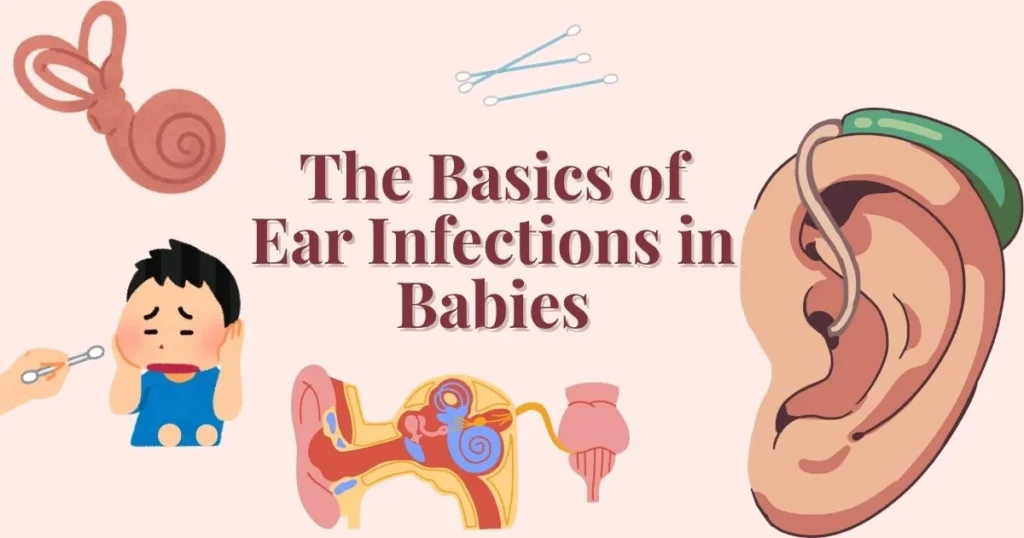
Ear infection in babies, called acute otitis media, happens when fluid gets trapped behind the eardrum and becomes infected, usually after a cold. Babies are built for this to happen: their eustachian tubes are smaller and more level than an adult’s, so fluid gets stuck easily. The risk is highest in babies and toddlers.
Here’s what nobody told me: ear pulling alone isn’t enough to go on. Babies pull at their ears when teething, when tired, and when exploring their own face. Ear pulling plus fever plus a recent cold plus disrupted sleep is a meaningful combination. One sign on its own tells you very little.
The First Real One — What I Noticed
When my son’s actual ear infection came, it looked nothing like what I’d been watching for.
No dramatic ear pulling. Just inconsolable in a specific way. He wouldn’t nurse comfortably. He kept waking up after falling asleep, which he hadn’t been doing. A low persistent fever. And he’d had a cold the week before that seemed to clear up.
That pattern of a cold, a few better days, and then suddenly worse is a common ear infection timeline. Viral infections like a cold can create the conditions for an ear infection, and the infection can show up after the cold seems to be over. Parents miss it because they think the illness is already finished.
I had assumed a fussy baby just needed settling, without realizing something specific was happening underneath.
Second Time Around — What Changed
14 months. Same pattern. Cold first. A few good days. Then the nighttime fussiness that didn’t fit. Low fever. Not feeding right.
Called the pediatrician instead of waiting. That call was right.
What surprised me was that many mild ear infections improve without antibiotics. AAP guidelines say that for a 6- to 23-month-old with a mild infection in one ear, either antibiotics right away or 48 to 72 hours of watchful waiting with pain relief is an acceptable option. Both ears, a high fever, or a draining ear change that, and watchful waiting is no longer an option.
Under 6 months is different. Any suspected ear infection under 6 months gets seen the same day and treated if confirmed. No waiting at that age.
What Surprised Me Most
Pacifier use after 6 months is linked to a higher ear infection risk. I hadn’t seen that anywhere until I went looking. It’s not a reason to panic if your baby uses one, just something worth knowing.
Secondhand smoke was the other one. Children who live with adults who smoke are more likely to get ear infections, and it almost never comes up in normal parenting conversations about ear infections.
What changed things for me was that I stopped watching for individual ear infection symptoms in babies and started looking for the pattern. Cold first. Specific fussiness. Feeding changes. Disrupted sleep in a new way. That story together is what’s worth calling about. One symptom alone means very little.
When to Call About Ear Infection Symptoms in Babies
Watchful waiting works sometimes. Not these times.
Under 6 months with any suspected infection — call the same day. Fever above 102.2°F (39°C) — call. Anything draining from the ear — call. Swelling behind the ear, facial weakness, stiff neck, baby who seems severely unwell — call right away. Those are rare but serious and need urgent evaluation, not home treatment.
OTC cold medicines, decongestants, antihistamines — don’t work for ear infections in babies. Safety warnings exist for children under two. Skip those completely and just call instead.
What Actually Got Us Through It
Knowing the pattern of ear infection symptoms in babies. That was the main thing.
Not ear pulling alone. The combination of a cold first, specific nighttime fussiness, feeding changes, and a low persistent fever is what I learned to recognize and act on instead of panicking every time he touched his ear.
Pain relief while waiting helped too: infant paracetamol, in the dose your pediatrician or the label gives for your baby’s age and weight. That handled enough of the discomfort that my son could sleep, which helped us both get through it. Ask your pediatrician first if your baby is very young.
A yearly flu vaccine (from 6 months of age) is worth mentioning too. Flu is a common trigger for ear infections, so preventing flu cuts down the whole chain. The same goes for handwashing, avoiding secondhand smoke, and not letting babies fall asleep with a bottle.
Ear Infection Symptoms in Babies FAQs
1. How do I tell ear infection symptoms in babies from teething?
The hardest part is that they look so similar. Teething doesn’t usually cause a real fever, and there’s almost always drooling and gum chewing happening. An ear infection usually follows a cold, changes how the baby feeds, and wrecks nighttime sleep in a specific way.
Ear pulling by itself tells you very little. And at 2 am it’s genuinely hard to tell: my son had a temperature of 101°F that night and the doctor still found clear ears. If your baby has a fever, call your pediatrician rather than assuming it’s teething.
2. Does every ear infection need antibiotics?
No. Many mild ear infections improve on their own, which is why watchful waiting is sometimes an option. Antibiotics are needed right away for babies under 6 months, when both ears are affected in a 6- to 23-month-old, when there’s a high fever or ear drainage, or when the baby looks really sick. A mild infection in one ear in an older baby can sometimes be watched. It’s not your job to figure that out alone: call and let the doctor look.
3. What antibiotic does the doctor usually give for a baby ear infection?
Amoxicillin, usually at a high dose, for about 10 days in children under 2. Your doctor decides the dose and the length of the course. The important part nobody mentions: don’t stop early just because he seems completely fine by day four. Ask your doctor before stopping, because infections can come back.
4. When do babies actually need ear tubes?
When infections keep coming back — roughly three in six months or four in a year. Or when fluid stays trapped long enough to affect hearing. That’s a conversation with a pediatric ENT, not something you decide from a blog or a symptom checker.
5. How do I actually prevent ear infections?
A yearly flu vaccine from 6 months of age, since flu triggers a lot of ear infections. Constant handwashing. Keep smoke away from him completely. Feed him in a semi-upright position rather than lying flat with a bottle, and break the bottle-to-sleep habit early. After 6 months, think about reducing pacifier use. Nothing complicated, just consistent.
That 2 am night felt like an emergency. It was teething.
The real ear infection symptoms in babies, when they came, were quieter. More specific. I recognized them because I knew what to look for by then.
You’ll learn the pattern too. And when you’re not sure — that’s what pediatricians are for.
With love from BabyGuideNest 💛
A Quick Note
I’m Hafiza Sumaira, a mom of two, not a doctor or a pediatrician. This post shares my own experience and what I read from trusted sources, and it is not medical advice. A blog can help you recognize ear infection symptoms in babies as a pattern, but only a doctor can look inside those ears. Ear infections in very young babies can be serious, so please call your pediatrician when something feels off, especially under 6 months.