
Learning how to help child with homework without fighting wasn’t about a perfect
system — it was about timing, questions, and stepping back.
Some nights homework in our house feels like a competition nobody wins.
How to help your child with homework without fighting every night is a question I’ve asked myself more times than I can count.
I have two sons, 10 and 6, and homework time at our place is rarely quiet. My older one has six or seven notebooks to get through some days. My little one has maybe three. And that’s where the trouble starts. My older son sits down, sees how little his brother has, and the tears begin. It’s not really about the homework. It’s about it not being fair. He wants either the same amount as his brother, or for his brother to get more, so they finish at the same time.
My younger one, funnily enough, sometimes keeps one notebook aside and says he’ll do it when his big brother gets to his last one, so they can carry on together.
I tried writing the questions out for my older son so all he had to do was write the answers. The same issue came back almost every day. It took a lot of patience, and honestly, a few bribes too. A bedtime story, a small treat, whatever worked that night.

And then there are the nights when homework turns up late, crumpled at the bottom of a school bag, when everyone is already tired. Those sessions get finished, but they usually end in an argument.
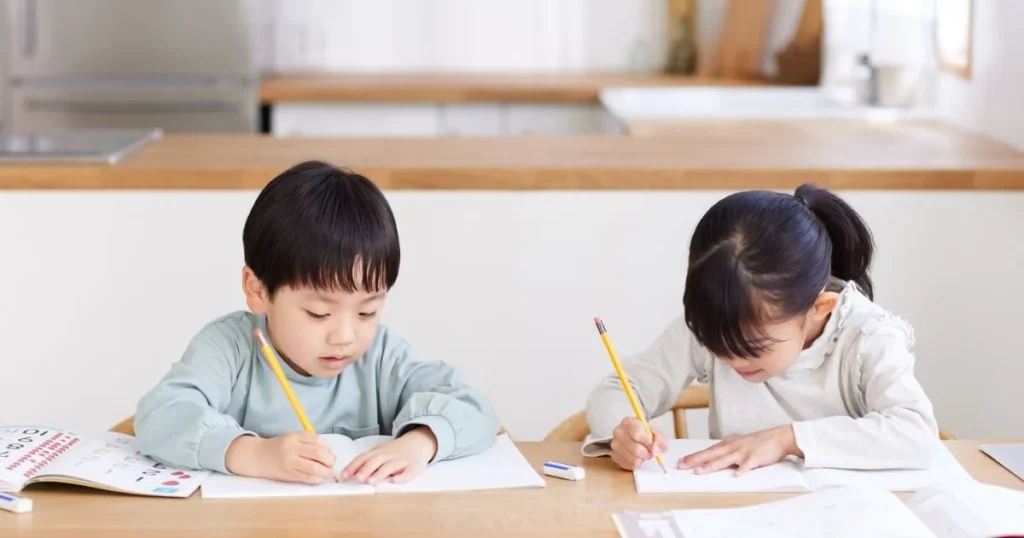
What Homework Help Actually Means
Your job is not to make sure the homework is correct. Your job is to make sure your child does the thinking. Helping your child with homework without fighting every night starts with understanding what help is supposed to look like — supervise, encourage, ask questions, stay out of the way. Not sitting next to them correcting every step. Not giving the answer the second they pause. Not rewriting sentences until it sounds like you instead of them.
Homework fights come in many forms, but one of the most common is when a parent explains something and the child just can’t take it in. The fight happens most often when parents try to explain, and children can’t receive the explanation. The transfer of information itself is where it breaks down. Not bad parenting. Not a difficult child. Just a dynamic that doesn’t work.
How to Help Child With Homework Without Fighting: Fix the Timing First
Homework right after school almost never works. Kids walk in the door completely done. They’ve spent the whole day sitting still, listening, following rules and getting along with everyone. Then we put a worksheet in front of them and expect their brain to just keep going.

Here’s what nobody told me — children need a real transition. Snack. Movement. Actual downtime. Not fifteen minutes and then back to school mode. Starting homework immediately after school sets the fight up before anyone has even picked up a pencil.
Grades K to 2 — around 10 to 20 minutes of homework is the expected range. Grades 3 to 6 — 30 to 60 minutes. If it’s regularly running longer than that, the problem might not be your child. It might be the workload, and that’s a teacher conversation, not a home problem.
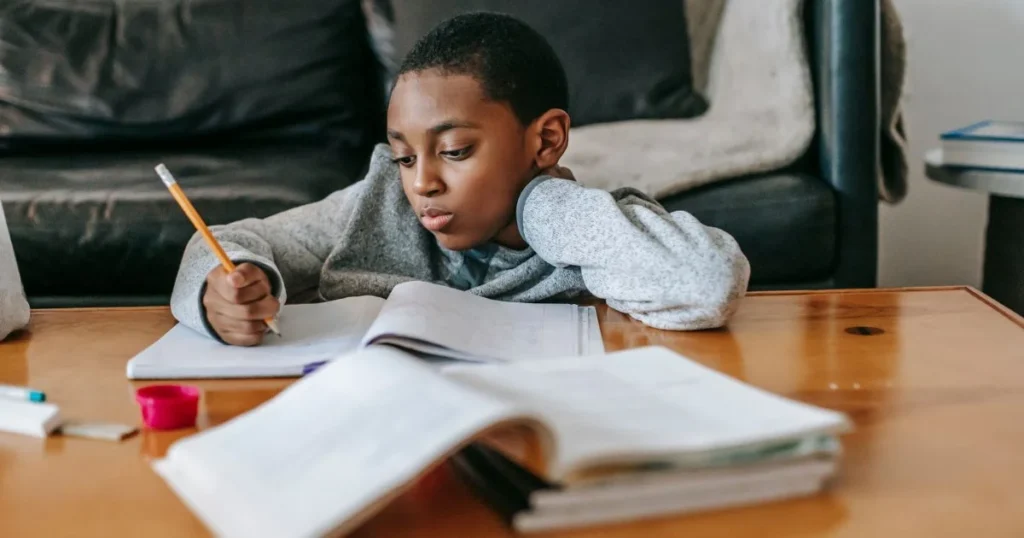
The Explanation Loop: When Explaining Makes It Worse
This is where a lot of homework fights end up. Your child hits something they don’t get. You explain it. Still nothing. You explain it again, a bit differently, and by now your voice has changed and they’ve gone quiet, because quiet feels safer than getting it wrong again. Nobody’s learning anything at that point. You’re just winding each other up.
That helpless feeling, when you can’t make something click and your kid sits there getting smaller by the minute, is awful. What tends to help isn’t a better explanation. It’s a reality ya question mark?. “What part makes sense so far?” “What have you tried?” “What comes first in your mind?” it is slower, and It feels slower. But when a child works it out themselves, it actually sticks.
It’s also worth holding back from fixing their work before they’ve finished. That’s harder than it sounds. A child who hands in their own thinking and gets the teacher’s feedback learns something. A child who hands in a parent’s corrections just learns that someone will fix it for them.
What Surprised Me Most
Two things are worth knowing.
First — First, when parents are stressed, their homework help tends to get less useful, not more. The urgency to just get it done often works against everyone. It sounds backwards, but it’s a pattern a lot of parents will recognise.
Second —what a parent thinks most of the time is happen during homework and what the child experiences can be very different. You feel like you’re helping, while they feel rushed, corrected or compared. With two kids it can be even simpler. In our house, my older son isn’t really upset about the homework. He’s upset about what feels unfair. That gap is where a lot of the fights actually live.
I used to assume my boys and I were at least on the same page about homework. We weren’t always.
When to Contact the Teacher Instead
Most homework fights respond to better timing and a different approach. Some don’t. If homework consistently takes much longer than the age guidelines, contact the teacher. If the same type of work is impossible week after week despite genuine effort — that might point to a learning or attention difficulty worth exploring. If your child is showing real distress, not just frustration — that’s a school conversation, not a home fix. Homework should not regularly replace sleep, meals, physical activity, or play. If it is — that’s something to raise with the school, not just push through at home every night.
What Actually Got Us Through It
Three things.
Consistent ones. A consistent routine. A set time, not right after school. Snack, some real downtime, then homework. Same time, same spot, supplies already out. Once it becomes routine, kids stop arguing about whether it’s happening. The predictability takes away a lot of the resistance before you’ve even started.
Questions before explanations. “Ask first, explain later. When my boys get stuck, my first instinct is to jump in and explain. But if I stop and ask “What do you think?” or “What have you tried so far?”, they usually surprise me. They start talking through it themselves, and half the time they get to the answer without me saying a word.
Breaking big assignments into smaller pieces. Having a visible smaller endpoint reduced the overwhelm enough that a child can start instead of stalling.
That’s it. No magic system. I simply chose a better time to help, asked different questions, and let my kids do their own thinking. And on the really hard nights, I won’t pretend a bedtime story as a little bribe didn’t help too.
FAQ
1. What is the actual amount of homework for my child?
Class 1 — roughly 10 minutes. Grade 3 — around 30 minutes. That’s the general rule. If it’s taking way longer consistently, that’s not a focus problem or a parenting problem. That’s a conversation with the teacher.
2. Should I sit with my child the whole time?
Nearby, yes. On top of every question, no. Sitting right there watching every pencil move teaches a child they don’t need to think, because you’re already doing it for them. Be around if they need you, but don’t do their homework.
3. How can I help when my child doesn’t understand the work?
Stop explaining. Ask instead. “What part makes sense?” “What did you try first?” I know it feels slower — it is slower. But a child who works it out remembers it. A child who gets told the answer remembers nothing except that you’ll always give it to them.
4. Is helping with homework actually okay?
Yes — but there’s a line. Guide, encourage, point toward resources. The moment you’re writing sentences or fixing answers until it no longer sounds like your child — you’ve crossed it. The teacher needs to see what your child can do. Not what you can do.
5. What if homework keeps happening right before bedtime?
Fix the time before anything else. A tired child and a stressed parent at 9 pm will never produce good work or a good relationship. Even moving it 30 minutes earlier makes a difference. The routine change usually ends more fights than any tip ever will.
Homework nights in our house still aren’t perfect, and I’ve stopped expecting them to be. But a calmer time, better questions and a bit of patience make them a lot more bearable.
The fights ease up when we stop trying to do the teaching and start helping our kids teach themselves.
Everything else followed from that. With love from BabyGuideNest 💛
A Quick Note
Just a mom here, not a teacher or educational specialist. Everything here comes from my own experience and research I’ve read. If homework is causing real distress, taking much longer than expected, or you suspect a learning difficulty — talk to your child’s teacher or school counselor. That conversation is always more useful than another hard night at home.