
32 weeks pregnant. Sitting on the couch after dinner when my stomach went completely tight.
Braxton Hicks contractions — I’d read the term exactly once in a pregnancy book and immediately forgotten it. At the time, I couldn’t shake the feeling that something was wrong. I called my husband in from the other room, my voice coming out higher-pitched than normal, and told him we needed to go to the hospital. He snatched his keys. We drove twenty minutes in near silence. The doctor checked everything, looked at me very kindly, and said — “this is Braxton Hicks. Your body is just practicing. Go home and drink some water.”
I drove home feeling equal parts relieved and slightly ridiculous. That same night I opened my laptop and started Googling every variation of “how do I know if it’s real labor” I could think of. By 2 am I had forty-seven tabs open and knew both everything and nothing. I closed the laptop. Drank some water. Went to sleep.
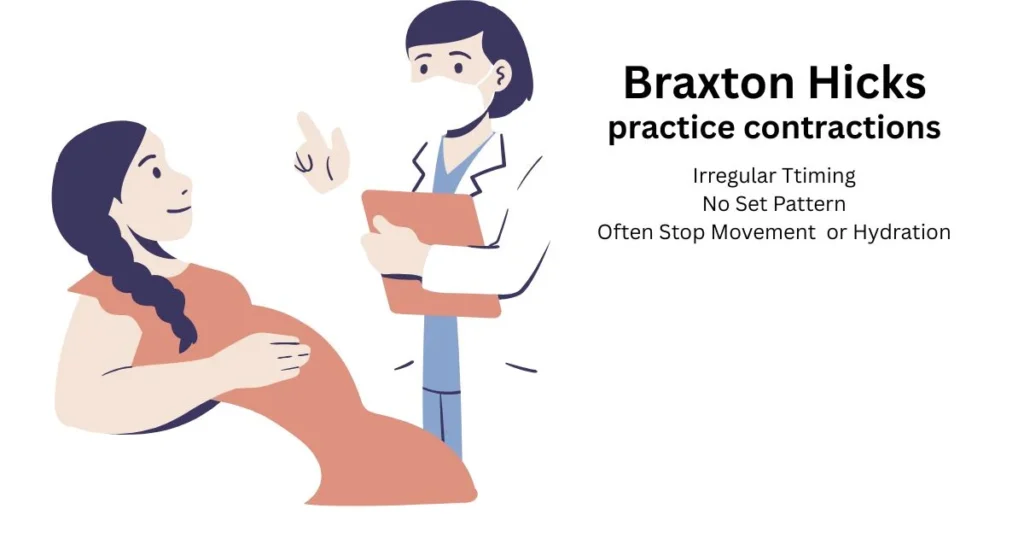
What Braxton Hicks Contractions Actually Mean
They’re called practice contractions for a reason — your uterus is literally rehearsing.
Braxton Hicks contractions are irregular tightening sensations that can begin as early as 6 weeks of pregnancy, though most women don’t feel them until after 20 weeks. Many don’t notice them at all until the third trimester. They’re the uterus building strength and preparing for the real thing — and they’re completely normal, completely harmless, and genuinely confusing for most first-time moms.
Here’s what nobody told me — Braxton Hicks can also help soften and thin the cervix in the weeks before labor. They’re not just random tightening. They’re actually doing something useful, slowly and quietly, long before your due date arrives.

Second Trimester — What I First Noticed
The first time I felt one, I was walking to the kitchen mid-afternoon.
Just a sudden tightening across my whole belly. Firm. Uncomfortable but not painful. Lasted maybe a minute and then faded completely. I stood completely still waiting for it to happen again. It didn’t. I convinced myself it was nothing and went on with my day.
Here’s what nobody told me — that exact experience is textbook Braxton Hicks. Irregular. Brief. Fades on its own. Somewhere between 30 seconds and 2 minutes — then gone. No pattern. Doesn’t build. Doesn’t repeat on a schedule. Change position, drink water, sit down — usually that’s all it takes.
Awkwardness isn’t the same as dangerous. Took me a while to actually feel that difference rather than just reading it. All of this is not the same thing. This matters.
Third Trimester — When They Got More Noticeable
By the third trimester, Braxton Hicks felt more present. More frequent. Harder to just ignore and move on from.
End-of-day tiredness made them feel more intense — I noticed this consistently. By 7 pm after a full day, a tightening that would have been minor at noon felt much more significant. That’s not a sign something is wrong. Fatigue genuinely makes them feel stronger, and the end of the day is when most women report them most intensely.
I’ve been there — sitting through one at 8 pm wondering if this was the beginning of something, then feeling it fade completely and going back to watching television.
Dehydration was the other big trigger. When I was well-hydrated, they were infrequent and mild. When I’d had a busy day and forgot to drink enough, they picked up noticeably. The recommendation of 8 or more glasses of water per day during pregnancy isn’t just general wellness advice — it directly affects how often these happen. A full bladder also irritates the uterus. Both things are easy to manage, and both make a real difference.
Let me be real with you — I was drinking far less water than I thought I was. Tracking it for one week genuinely changed how my third trimester felt.
What Surprised Me Most
Two things caught me completely off guard.
First — sexual activity can trigger Braxton Hicks. Orgasm releases oxytocin, and prostaglandins in semen can also stimulate uterine activity. I had not expected to read that anywhere, and I definitely hadn’t been warned about it. Completely harmless — but knowing it exists means not panicking when it happens.
Second — the 5-1-1 rule. I didn’t know this existed until my third trimester appointment, and I wish someone had told me in the first trimester. After 37 weeks, if contractions are coming 5 minutes apart, lasting 1 minute each, for at least 1 hour — that’s the signal to call your provider. Not a Braxton Hicks pattern. A real labor pattern.
This one thing changed everything for me — having an actual number to track meant I could stop guessing. Not “does this feel like labor?” but “is this happening every 5 minutes?” One of those questions has an objective answer. The other one doesn’t.
A Mistake I Made With My First Baby
With my first baby, the pressure to “get things moving” came from everywhere. Relatives kept asking when it was going to happen, and someone told me to drink castor oil. I was a first-time mom and honestly didn’t know any better, so I did it. Soon after, the tightening started, and I rushed to the doctor sure that it was labor. It wasn’t. The doctor told me it was Braxton Hicks, not real labor pains, and my baby arrived about 10 to 15 days later.
Looking back, I wish I had called my doctor before drinking anything. Please don’t try to start labor on your own with home remedies like castor oil unless your provider says it’s okay. Your baby will come when they are ready.
When to Actually Call Your Doctor
Most Braxton Hicks need nothing more than water, rest, and a position change. A few specific situations need an actual phone call.
Before 37 weeks — if you’re having regular contractions every 10 minutes or more, lasting 30 seconds or longer, and they’re not easing with rest or hydration, call. That’s the preterm labor threshold, and it needs to be evaluated.
Call also for any bleeding, any fluid leaking, severe pain that doesn’t ease, or decreased fetal movement. The movement count matters — fewer than 10 movements in 2 hours in the late second or third trimester, or fewer than 20 movements in 12 hours, is worth calling about regardless of contractions.
Honestly, this surprised me too. I hadn’t connected fetal movement tracking with the Braxton Hicks conversation until my OB specifically linked them. They’re separate concerns but both matter in the same window.
What Actually Got Us Through It
Three things made the most practical difference.
Water. Consistently, throughout the day, before I felt thirsty. Not catching up at dinner. Actually tracking it for two weeks until it became automatic. Braxton Hicks frequency dropped noticeably within days of properly hydrating.
Position changes when they hit. Lying down if I’d been standing. Standing if I’d been sitting. Walking slowly if I’d been still. Changing position is one of the most reliable ways to ease a Braxton Hicks episode — and it also helps distinguish it from real labor, which doesn’t ease with position change.
And the 5-1-1 rule on my phone. Written down, saved, referred to whenever I wasn’t sure. Having the actual threshold meant I could make a clear decision instead of sitting in uncertainty at midnight with forty-seven browser tabs open.

FAQ
1. How do Braxton Hicks contractions actually feel?
Like your whole belly goes firm and tight, then releases. Tight, firm, then gone. No buildup. No warning. Just shows up and fades out on its own within a minute or two. Irregular timing is the key feature — no consistent pattern, no escalation.
2. How do I tell Braxton Hicks from real labor?
Move around. Drink water. Lie down. If it settles — Braxton Hicks. Real labor doesn’t care what position you’re in. It keeps building regardless. The 5-1-1 rule is your clearest guide after 37 weeks — contractions 5 minutes apart, 1 minute long, for 1 hour.
3. What triggers Braxton Hicks contractions?
Not drinking enough, needing to use the bathroom, being on your feet all day, being tired, even sex — all of it can set one off. Most of these are just life. Water and a sit-down fix most of them. Most triggers are manageable — water and rest handle the majority of them.
4. Can Braxton Hicks start in the second trimester?
Yes — they can technically begin as early as 6 weeks, though most women don’t feel them until after 20 weeks. You feel like this in the 2nd trimester, and this is normal, and this is not a sign of premature labor.
5. When should Braxton Hicks make me call my doctor?
Before 37 weeks — if they’re regular, every 10 minutes or closer, for 30 seconds or more, and not easing with rest and hydration. Any time — if there’s bleeding, fluid leaking, severe pain, or reduced fetal movement. When in doubt, always call. That’s what your provider is for.
That drive to the hospital at 32 weeks — I think about it now and laugh a little. That day I wasn’t laughing, actually. Nobody told me about what this truly felt like before it happened to me.
Drink water as much as you can. You know about this 5-1-1 rule. Call when something feels off. Know your numbers. And call when something doesn’t feel right — that’s never the wrong decision.
With love from BabyGuideNest 💛
A Quick Note
Just a mom here, not an obstetrician. Everything in this post comes from my own pregnancy experience and the research I’ve read along the way. If you’re ever unsure whether what you’re feeling is Braxton Hicks or something that needs attention — please call your provider. A phone call costs nothing. Waiting too long when something is actually wrong costs more than that.