
I decided to formula feed and told a relative. She said “breast is best” and then changed the subject.
Formula feeding guide — I needed one badly, and what I got instead was a lot of quiet judgment and almost no practical information. I didn’t need anyone to sell the benefits of breastfeeding; I knew this very well. I needed someone to help me make a bottle correctly without accidentally doing something wrong.
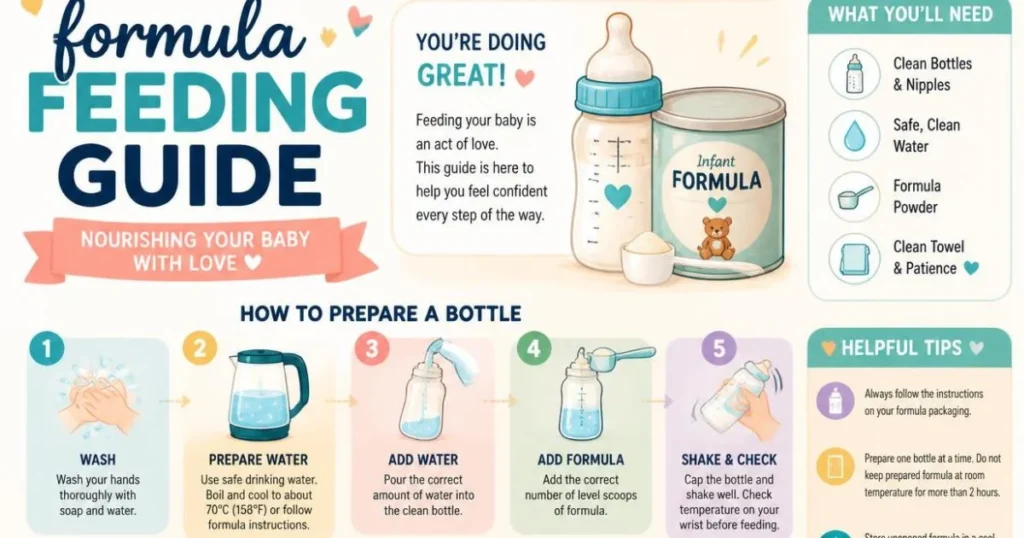
Which I did. First bottle I ever made — I put the scoop in first, then added water. Found out weeks later from a pharmacist that it’s supposed to be water first, then powder. The ratio gets affected when you do it backwards. I had been doing it wrong for weeks without knowing it was wrong.
Then there was the formula aisle. Eight brands. Sensitive. Comfort. Anti-reflux. Organic. Partially hydrolysed. I stood there for twenty minutes, read nothing useful on any of the tins, and picked one based on which box design I found least overwhelming. That is not a system. But nobody had given me an actual one.
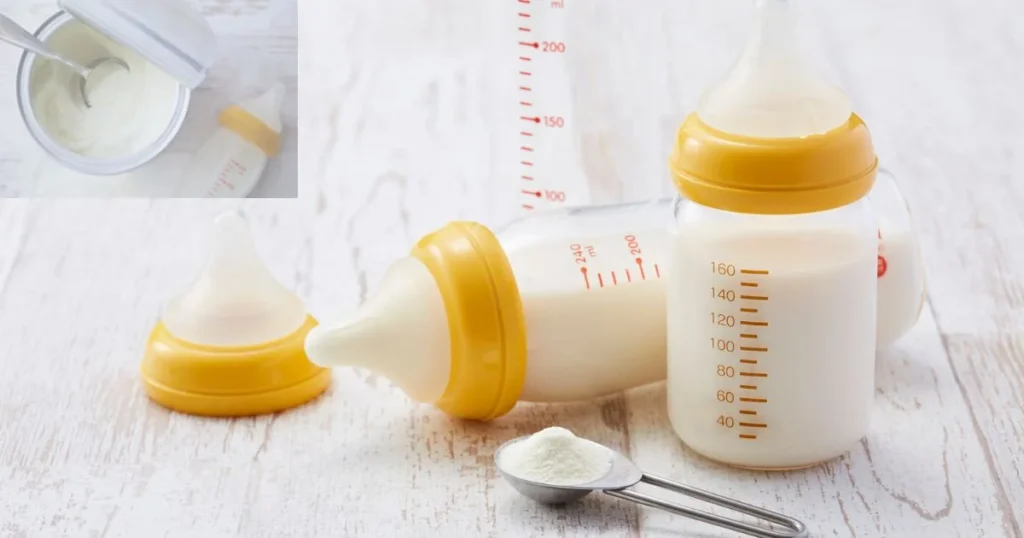
What a Formula Feeding Guide Actually Covers
Not just which formula to buy. Everything — preparation, amounts, timing, safety, and how to actually read your baby instead of a clock.
A formula feeding guide covers the full picture: how to prepare formula safely, how much to offer at each stage, how to recognise hunger and fullness cues, what mistakes to avoid, and when something needs medical attention. Formula is the medically accepted alternative to breast milk during the first year — it provides the nutrients an infant needs to grow — and getting the preparation right matters more than most parents realise going in.
Here’s what nobody told me — 46.3% of parents make at least one formula preparation error. Nearly half. Not because they don’t care. Because nobody walked them through it properly before they needed to do it alone at 3am.
The Newborn Stage — What I Noticed
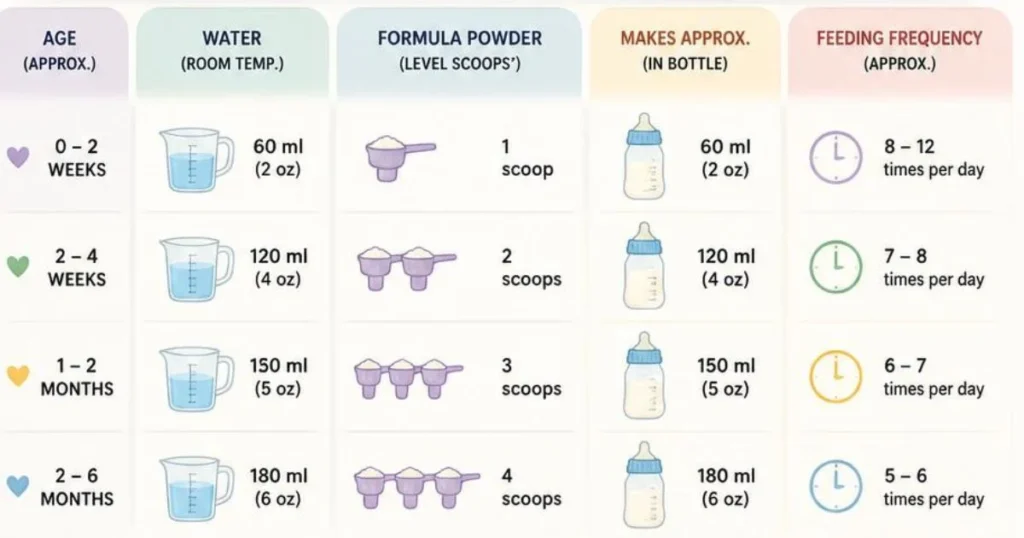
Ayla fed constantly. Every two to three hours, sometimes less. I had no framework for whether this was normal. Newborns normally feed 8 to 12 times daily, taking around 60 to 90 mL per feed. That’s a large number of bottles. A lot of preparation. A lot of opportunities to get the ratio slightly wrong, use water that wasn’t the right temperature, or leave a bottle sitting on the counter longer than it should have been. Here’s what nobody told me — powdered formula is not sterile.
This surprised me when I found out. The 70°C+ water rule for powdered formula isn’t random — that heat is what actually kills off any bacteria that might be lurking in the powder. I used to let the water cool down all the way before mixing it in, mostly because I was worried about burning her mouth. That’s the wrong way of thinking. Make it very little hot to be safe, then cool the bottle fastly under cold running water before feeding. Prepared formula left at room temperature — maximum 2 hours. Not two and a half. Not “it’s probably fine.” Two hours and then it goes. I kept this rule strict and I think it was worth the occasional wasted feed.
Months Two to Four — When Things Changed
The amounts increased. The frequency spaced out slightly. And the formula aisle made more sense once I stopped trying to choose everything at once.
By the time your baby hits about 2 to 4 months, feeding usually shifts to bigger amounts, less often — think around 6 to 7 feeds a day, working up toward roughly 150 to 200 mL per kilogram of your baby’s weight, per day. But treat that as a general guide, not a strict rulebook. What really matters more than hitting a number is watching your baby — are they showing hunger cues, are they turning away when full? Those signals tell you more than any chart ever will. I’ve been there — watching Ayla turn her head away mid-bottle and then wondering if she’d had enough. She had. That head turn, that loss of interest, that slowing down — those are fullness cues. Forcing more after those signals appear doesn’t help and trains a baby away from recognising their own hunger.
The positioning piece also took me time to get right. Semi-upright at approximately 45 degrees. The bottle angled so the nipple stays full of milk. Pace feeding — giving short breaks during the feed, letting her control the speed. These details are in the instructions and also in a tiny font that nobody reads at 2am. Let me be real with you — formula is expensive. Estimated at $100 to $125 per month, and up to $1,200 to $1,500 before a baby’s first birthday. That’s a real number. Budget for it early. And if cost becomes a genuine barrier, WIC programs in the US provide formula assistance — ask your pediatrician.
What Surprised Me Most
Two things I didn’t see coming.
First — the scoop rules are brand specific. Every formula brand calibrates its scoop to its own powder density. Using a scoop from a different brand — even briefly because you lost yours — changes the ratio. Packing the scoop, heaping it, or not levelling it off changes the ratio. Adding powder before water changes the ratio. The ratio matters because too concentrated puts strain on a baby’s kidneys and too dilute means they’re not getting enough nutrition. This is not a detail. It’s the whole thing.
Second — the order of types. Three exist: powdered, concentrated liquid, and ready-to-feed. Ready-to-feed is exactly what it sounds like — open and pour. Most expensive. Safest for very young newborn or with a weaker immune system babies because it is sterile. Concentrated liquid needs water added. Powdered is most economical but requires the most careful preparation. I hadn’t known these were different categories before I started. I’d assumed formula was formula.
Honestly, this surprised me too. The nutrition differences between them are minimal when prepared correctly. The safety How they compare in preparation are actual and valuable understanding before you begin.
When to Talk to Your child specialist:
“Formula feeding questions are usually easier to answer than they seem — with practical, real solutions.” A few situations need medical input. Talk to your pediatrician before switching formula — especially to specialised types like anti-reflux, comfort, or hypoallergenic. These aren’t always necessary and switching unnecessarily can be expensive and disruptive. If your baby seems genuinely uncomfortable after feeding, has blood in their stool, or isn’t gaining weight appropriately — those are reasons to discuss formula with your doctor, not reasons to quietly try six different tins off the shelf. If you’re ever unsure about your water source — travelling, using well water, uncertain about local supply — use bottled or boiled water and discuss with your provider. This isn’t paranoia. It’s a real preparation variable
What Actually Helped Us
This formula feeding guide came down to three habits — water first, one
bottle at a time, and watching her instead of the clock.
Three things that made formula feeding feel manageable instead of overwhelming.
Water first, always. Measure the correct amount of water first, then add the powder. This isn’t just convention — it ensures the ratio is accurate. I put a sticky note inside my kitchen cupboard for the first month. Genuinely helped.
Making one bottle at a time. Some parents batch prepare and refrigerate — that’s acceptable for up to 24 hours. But in the early weeks when I was making errors, one at a time meant one error at a time and nothing sitting longer than it should. Simpler. Less to track.
Watching her, not the clock. The amounts and frequencies are guides. Ayla sometimes wanted more, sometimes less. Feeding to hunger cues — rooting, fussing, hands to mouth — and stopping at fullness cues — turning away, slowing down, going still — produced better feeds than trying to hit a number every time. The guide gives you a framework. The baby tells you what’s actually right.
FAQ
1. Water first or powder first?
Water first. Always. Measure the water, then add the powder. Adding powder first affects the ratio and concentration. The instructions on the tin say water first for a reason.
2. “Is there a way to know if I’m feeding my newborn enough — or too much?
Start with 60 to 90 mL per feed, 8 to 12 times per day. Adjust based on hunger and fullness cues — your baby will show you. As they grow, amounts increase and frequency spaces out. Your pediatrician will monitor weight gain and can confirm if intake looks right.
3. Can I use any scoop in an emergency?
No — scoops are calibrated to each brand’s powder density. Using another brand’s scoop changes the ratio. If you’ve lost yours, contact the manufacturer or use a clean levelled measuring spoon while you get a replacement.
4. How long can the prepared formula sit out?
Two hours at room temperature. In the fridge, up to 24 hours for pre-prepared bottles. Discard anything that’s been left longer. It’s not worth the risk of bacterial growth.
5. Does formula type matter much — powdered vs ready-to-feed?
Nutritionally, not significantly when prepared correctly. Ready-to-feed is the safest bet — it’s sterile right out of the container, which matters most for younger or more vulnerable babies. Powdered is the cheapest option but needs careful prep to stay safe. Concentrated liquid lands somewhere in between. Normally, pick what is actually best for your baby and your whole situation, not just the lowest price tag.
That relative’s comment is a distant memory now. Ayla is three, healthy, thriving, completely unbothered by the feeding decisions made in her first year. What mattered was that she was fed. What also mattered was that I learned to prepare the bottle correctly — water first, right temperature, right ratio, not left sitting too long. Fed is best. And knowing how to do it properly is the whole guide.
With love from BabyGuideNest 💛
A Quick Note
Just a mom here, not a pediatric nutritionist. Everything in this post comes from my own experience and research I’ve read. If you have concerns about your baby’s formula intake, weight gain, or reactions — please talk to your pediatrician. They’re the right person for those questions, not a tin label or a parenting forum.