
Learning how to be a better parent starts with small habits done consistently. I had a full breakdown in my car…, out in the open, at the grocery store when my daughter was three. Not her. Me.
She’d requested for a biscuit fourteen times in ten minutes, I’d said no fourteen times, and on the fifteenth time, I lost my temper . Loudly. On the cereal shelf.
An older woman looked at me with this expression I still think about — not judgmental, just tired and knowing. Like she’d been exactly there herself twenty years ago.
I sat in the car afterward and genuinely asked myself, ‘Am I doing this wrong?’ Is there a version of this where I’m actually good at it?
That question sent me down a very long road. I read everything. I asked my pediatrician. I talked to other moms. And what I found wasn’t a perfect parenting formula — it was a handful of small habits that, done consistently, actually changed things. Not overnight. But they changed things.
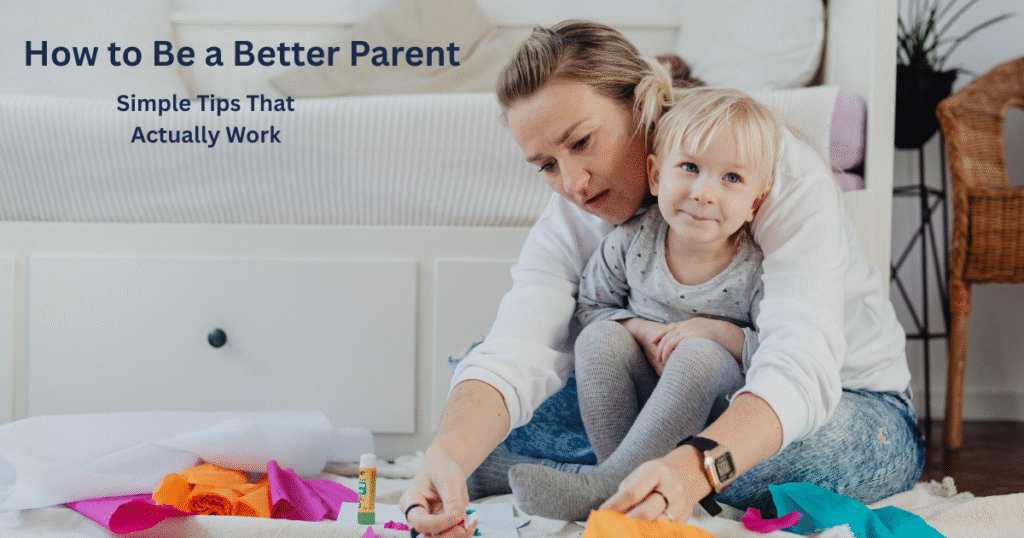
What Being a Better Parent Actually Means
Here’s the thing — better parenting isn’t about being calmer than you feel or more patient than you are.
It’s about small, do-again habits that build trust gradually. Presence. Consistency. Listening. showing the responses you actually want to see. That’s it. No certification required.
The evidence points to this. In 2025, 78% of parents said they were open to different ways of parenting — driven by understanding, clear boundaries, and emotionally intelligent parenting. And specialist trends are pointing in the same direction: emotional intelligence and responsive parenting are now considered the most reliable signs of healthy child development.
But — and this matters — nearly 1 in 2 parents aren’t sure gentle parenting actually works in real life. I was one of them. Turns out it does. It just looks messier than the Instagram version.
The Habits That Actually Changed Things For Us
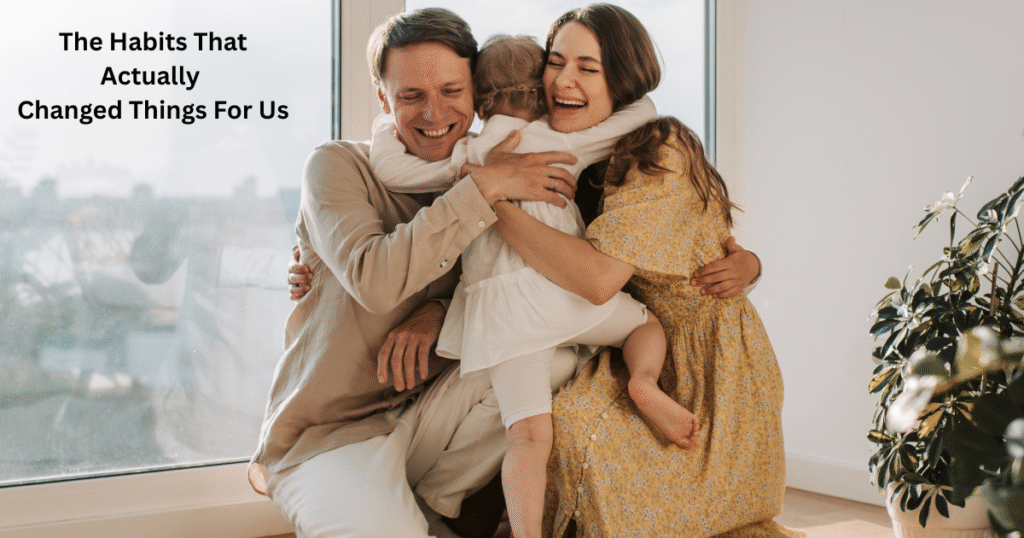
I’m not going to give you a list of fifteen things and wish you luck. Instead, let me walk you through what actually shifted things in our house — and why.
Showing up without your phone.
Twenty minutes a day of actual attention — no going through, no half-listening — changed my daughter’s responsiveness more than any discipline approach I tried. Kids who feel really seen need less. Less testing, less acting out, less noise. I’ve been there, fatigued, handing her the tablet just to get five minutes. But the days I put the phone down first always went stronger. Be honest with your words, and follow through with your actions. Rules that change are the number one mistake your child’s doctor flags.
If you say screen time ends at six, it ends at six. Every time. The nights I gave in because I was tired — she pushed harder the next day. Every single time. Kids need to know where the edges are. It actually makes them feel safer, not restricted.
Offering choices instead of commands. Your child’s doctor backed this one hard. “Do you want to brush teeth before or after you put on bedtime clothes ?” She still brushes her teeth.
But she felt like she had decided. The difference in cooperation was immediate. This one thing changed everything in our bedtime routine.
Naming feelings out loud — yours and hers. “I’m feeling pressured right now, so I need a minute.” Displaying emotional words is one of the most valuable things you can do for a child’s emotional intelligence. My daughter started saying “I’m feeling mentally drained” at three and a half. Because she’d heard me say it first.
Following through on consequences. Not punishment — consequences. Natural ones where possible. “If you throw the toy, it goes away for the rest of the day.” Then, actually putting it away. The follow-through is everything. Weak follow-through teaches kids that boundaries aren’t real.
Here’s what nobody told me — consistency is more exhausting than strictness. Being strict once is easy. Being consistent every single day, when you’re tired and stressed, and 48% of parents describe their stress as completely overwhelming — that’s the hard part. That’s also the part that works.
What Made Things Harder
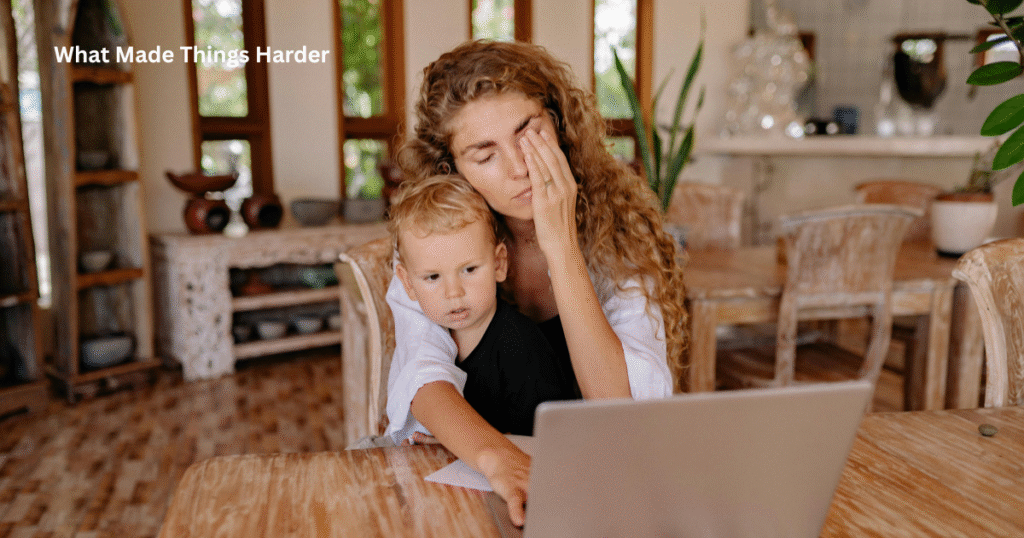
I had to get genuine with myself about what I was doing wrong. And a few things occurred frequently. Screen time crept up gradually. Not dramatically — just slowly, bit by bit, until it was too much and I could see it in her attention span and her mood. Pulling it back was painful for about a week. Then things got noticeably better.
Information pressure was an actual problem for me. I was reading so many parenting thoughts that I stopped trusting my own feelings completely.
Analysis paralysis is real. Too many voices saying opposite things made me inconsistent — because I kept second-guessing myself mid-situation.
Let me be real with you — I also leaned too hard on punishment-first tactics early on. Taking things away, raising my voice, reacting before thinking. It worked in the moment and made everything worse over the next hour. Every time. Empathy first, boundary second is slower, and it’s harder, and it genuinely works better.
The Numbers That Surprised Me
Mothers average 14 hours of direct childcare per week. Fathers average 8 hours, which is actually four times more than fathers in 1965, which is progress worth acknowledging.
But mothers are also three times more likely to be managing schedules and appointments. Which means the mental load sits unevenly, and parental stress is high across the board.
Honestly, this surprised me too. I thought I was just bad at managing. Turns out most parents are running on very little margin. And parenting well from a place of burnout is genuinely hard. Taking care of yourself isn’t optional — it’s part of the job.
Questions I Get Asked Most
What is the single most important parenting habit?
Honestly, I spent two years looking for the answer to this. Read the books, watched the videos, and asked everyone I knew. The answer was boring and also completely true — consistency. Not on the good days. On the tired days. The days you want to just give in and move on. Those are the days that actually build trust.
Does gentle parenting actually work?
I was doubtful for a long time. It looked good on paper and fell apart the second my daughter had a breakdown in public. What I eventually figured out — gentle parenting without firm limits is just chaos with a nice name. Empathy first, yes. But the boundary still has to be there, every time. That combination actually works. The soft version without follow-through does not.
I lose my temper many times. Am I doing whatever is wrong as a parent?
I used to think missing my temper meant I was struggling. Then I realized the parents who never repair those moments are the ones doing damage, not the ones who lose it and come back. I’ve snapped. I’ve been too sharp. Every time I’ve gone back afterward and named what happened, something between us got stronger, not weaker. The rupture isn’t the problem. Leaving it unrepaired is.
How do I parent well when I’m completely burned out?
A friend told me something that actually helped — you can’t pour from an empty cup, but you also can’t wait until the cup is full to start parenting well again. So pick the smallest possible thing and do just that consistently. For me, it was bedtime. Thirty minutes, same every night, no negotiating. Everything else stayed messy for a while. But that one anchor held us together until I had more capacity for the rest.
My partner and I discipline differently. Is that a problem?
Ours do too. We gave up on agreeing about everything — that was never going to happen. Instead, we picked two things we’d both hold firm on, every time, no exceptions between us. Kids find the gaps between parents instantly. Finishing even two of those gaps made an easy-to-see difference within days.
Conclusion:
As I reflect on all of this, here’s where I stand: I’m still working this out. Every day.
Some days our routine holds, and everyone goes to bed calm, and I feel like I actually know what I’m doing. Other days, she’s crying about something I’ll never fully understand, and I’m running on three hours of sleep, and I’m just doing my best.
That’s most of parenting. Doing your best with what you have on that particular day.
The habits matter. The consistency matters. And so does the fact that you’re reading this at all — because it means you care. Keep going. 💛