
Child development stages ages 3 to 10 can look easy on paper. By three, many kids talk in full sentences, sleep through the night, and have mostly stopped the big meltdowns in the grocery store. It’s tempting to think, “Right. We survived. The difficult early years are behind us.”
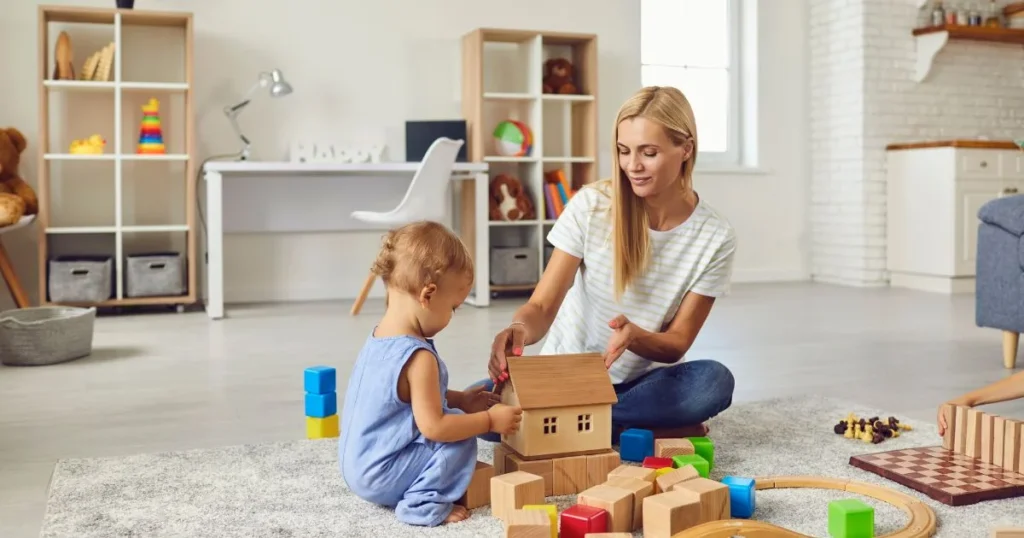
No one warns you about what comes next.
These years from three to ten are not one single stage. It can feel like seven different children living in the same body. One year they’re glued to your leg, and the next they tell you you’re embarrassing in front of their friends. Through all of it, parents need to know what’s typical, what’s a warning sign, and what simply needs more patience than you feel you have.
If you’re in the middle of these years right now, this guide is for you.
Child Development Stages Ages 3 to 10 at a Glance
This table shows the child development stages ages 3 to 10 at a glance, with a detailed guide for each age.
| Age | What to expect | Read more |
| 12 to 36 months | Walking, first words, big feelings | Toddler milestones month by month |
| 18 months | Copying, first words, independence | 18 month old milestones |
| 2 years | Language, running, play with others | 2 year old milestones |
| 3 years | Sentences, pretend play, routines | 3 year old milestones |
| 4 years | Stories, rules, balance | 4 year old milestones |
| 5 years | School readiness, independence | 5 year old milestones |
| 6 to 8 years | Reading, friends, focus | Child not reading at grade level |
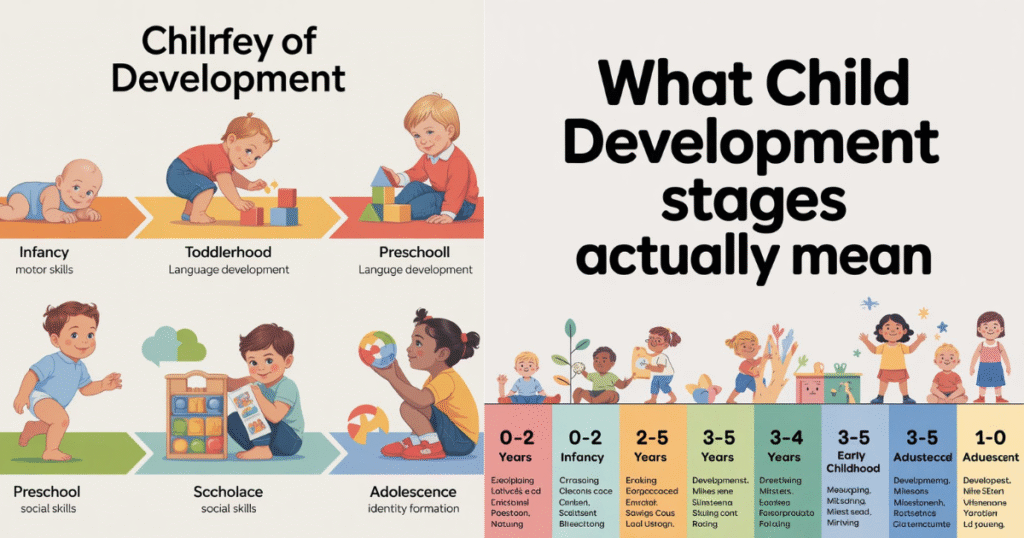
What Child Development Stages Ages 3 to 10 Actually Mean
Here’s the thing — when doctors talk about developmental stages, they’re not handing you a checklist to stress over.
They’re giving you a map. Doctors follow development across five main areas:
- skills like walking and running, climbing.
- skills like picking up small objects (writing, drawing, using scissors).
- language.
- mental skills development (thinking, problem-solving).
- how a child connects and manages emotions
Many parents don’t know any of this early on and assume development just… happens. It’s actually worth paying attention to, because spotting things early genuinely changes outcomes.
According to the CDC, about 1 in 6 children aged 3 to 17 has a developmental disability. That number isn’t there to scare you.
Child Development Stages Ages 3 to 5: The “Why” Years
Around three, the “why” questions start. Why Does the Sky Have a Blue Color? Why do we have to sleep? Why can’t dogs come to school? You answer one, and the next one is already waiting. It’s tiring, but it’s a good sign. It means their mind is growing.
My older son asked questions all day: why did this happen, how did it happen, who did it, why did you do it. He also remembered everything I taught him, and when people asked him questions, he answered, and everyone enjoyed it.
By three, people outside the family should be able to understand most of what your child says, not just you. Around four, you may notice your child starting to balance on one foot for a few seconds. By five, they’re usually getting better at taking turns and playing simple games with others. Running, jumping, catching a ball, and even holding a crayon can start to look much more controlled than before. Many can draw a person too, even if it’s just a head and a few lines.
The hard part for a lot of families is separation anxiety. You think it ended around 18 months, and then preschool starts and it comes back. Crying at the gate for a few weeks, sometimes longer, is common. It does get easier.
I expected my younger son to find it hard. He kept saying, “I won’t go, I won’t leave you, Mama.” My older son was happy and excited to go to school on his own every day. But when school actually started, both of them did far better than I had hoped
Child Development Stages Ages 6 to 8: School Changes Everything
When children start school, they begin to have opinions, friends, and jokes that are their own. It is lovely and a little bittersweet for parents at the same time.
shared jokes I wasn’t part of . It was lovely and a little bit heartbreaking at the same time. This stage is big for mental development. Kids aged 6 to 8 start thinking more step by step.
They understand cause and effect. They can read, write, do basic math, and begin to organize their thoughts in ways that actually make sense. Focus and attention span grow.
Here’s what nobody told me about this age: Inconsistent rules can really derail children at this stage.
When we’re tired, it’s so easy to let the little things go. I’ve noticed, though, that once bedtime gets loose, screen time stretches, or homework keeps getting pushed back, kids can start testing those limits more. Going back to the same simple rules every day usually makes things feel calmer again.
As moms, we sometimes expect our kids to do things on their own before they’re really ready. A 6-year-old, for example, may still need our help figuring out when to do homework and what to work on first. Expecting them to manage everything by themselves can leave both us and our little ones feeling frustrated.
They need structure — they just also need to feel like they have some choice inside that structure.
Child Development Stages Ages 9 to 10: The Quiet Shift

Around nine, big dramatic meltdowns often fade, and quiet moods, strong opinions, and a strong need for friends’ approval can show up instead. Social-emotional development at this stage is serious, even when it doesn’t look high-energy from the outside.
They care deeply about fairness. They start to pull away slightly from parents — not because something is wrong, but because that’s exactly what’s supposed to happen.
Physically, fine motor skills are sharp. They write fluently, use tools confidently, and have strong coordination. Gross motor skills mean most kids this age can ride bikes, swim, and play organized sports with real skill.
A helpful habit at this age is to ask questions instead of fixing every problem. “What do you think you should do?” helps a child feel respected and often means fewer arguments.
When to Call the Doctor About Child Development Stages
When doctors talk about child development stages ages 3 to 10, they’re not handing you a checklist to stress over.
But the AAP agrees: well visits are the most important time to review milestones, and parents should never wait if something feels off. Your instinct matters.
Call your doctor if your child:
- Has speech that is hard to understand past age 4 or 5
- Shows very little interest in other children or social interaction
- Loses skills they previously had — at any age, this is always worth flagging
- Struggles clearly with focus, behavior, or learning in ways that affect daily life
- Has serious anxiety or fears that don’t ease with confidence .
- Early support can make a real difference. If you’re unsure what to expect, the CDC milestone checklists are a good place to start.
What Actually Helped Us — Real Things, Not Pinterest Things
I’ve tried a lot. Here’s what actually moved the needle:
Strong daily routines made the biggest difference at every single age. Skipping routines — even for a few days — always showed up in behavior. Kids this age need to know what comes next.
I made a fixed time for learning, then play, and a fixed time for screen time too. I like doing everything at a fixed time. When my boys were small, I liked keeping their things in a routine, so homework had its own time. They did it, and after that they could do whatever they liked, and I could relax.
Consistency with rules isn’t about being strict—it’s about following through on what you say. When parents give in to whining, it tends to double.
Reading together doesn’t have to stop at picture books. Reading chapter books together builds vocabulary and focus, and gives you something to talk about that isn’t school or behavior.
Letting them struggle a little. Not solving every problem. Not jumping in too fast. This is often the hardest one, and the most valuable.
FAQs About Child Development Stages Ages 3 to 10
Q1 :What are the main child development stages ages 3 to 10?
A: Doctors look at how kids move, talk, think, use their hands, and handle their feelings. Every child develops at their own pace, and that’s okay.
Q2 : What are signs of healthy development at age 5?
A: Many five-year-olds follow longer directions, take turns in games, and write some letters of their name. They’re small things, but they add up fast.
Q3 : What signs might suggest my child needs extra support?
A: Losing a skill they already had is always worth a call to your doctor. So is speech that strangers still can’t understand past age 4, or very little interest in other children.
Q4 : What mistakes do parents make most?
A: Common ones are inconsistent rules, expecting too much too soon, and letting routines fall apart during school holidays. Behavior often improves once structure returns.
Q5 : How do I support development without spending money on programs?
A: Talk to them while you cook dinner. Read the same book fifty times without complaining. Let them try, even when time is tight. Be consistent every day. That’s what matters most—no special program needed.
Conclusion
The child development stages ages 3 to 10 are messy, surprising, sometimes exhausting, and honestly extraordinary.
Neither will I. But showing up, paying attention, and staying curious about who your child is becoming — that’s the whole job.
They’re figuring out the world. You get a front-row seat.
That’s worth everything. 💛
A Quick Note:
I’m a mom, not a doctor. This guide to child development stages ages 3 to 10 is general information, not medical advice.