
The best sleeping position for a newborn isn’t up for debate the way social media
sometimes makes it seem — and knowing the real answer matters more than almost
anything else in early baby care.
Three days after bringing Ayla home, I saw a video on Instagram of a newborn sleeping peacefully on their tummy. Comments were full of heart emojis. “So cute.” “Mine sleeps like this too.” “Babies sleep. It’s much better this way.
The best sleeping position for a newborn was anything I thought I already knew. Back to sleep. I heard it in the hospital. Read it somewhere. But that video made me genuinely second-guess myself, the way social media has a specific talent for doing at 11 pm when you’re exhausted and your baby won’t settle.
Then my mother-in-law visited on day five and told me she’d always put babies on their side. “That’s how we did it. All of you turned out fine.” I smiled. Agreed and quietly looked up the actual research after she left. What I found was not ambiguous. It was not “every family is different.” It was one clear answer, repeated across every major medical organization on the planet — and I’m going to share exactly what I learned.
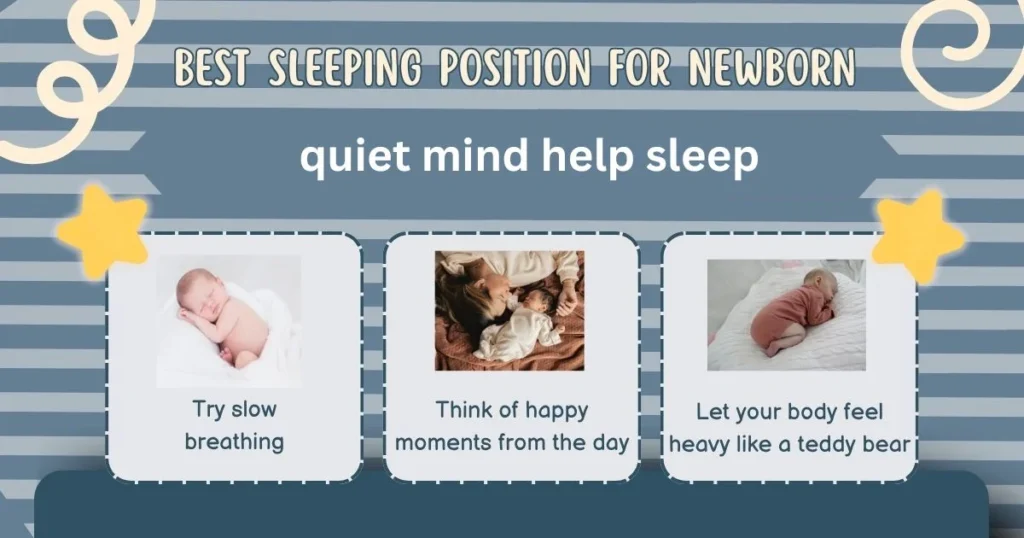
What the Best Sleeping Position for a Newborn Actually Means
Back. Every sleep. Every nap. Every time. Until 12 months.
The best sleeping position for a newborn is on their back — called the supine position — and this is not a suggestion or a preference. The AAP recommends it for every single sleep period until a baby’s first birthday. The NHS says the same. The research behind it is among the most regular findings in pediatric medicine in the global world.
From that time the “Back to Sleep” campaign officially started in 1994, SIDS rates have dropped by more than 50%. One positioning change. Half the deaths are gone. That number is worth sitting with for a short time.
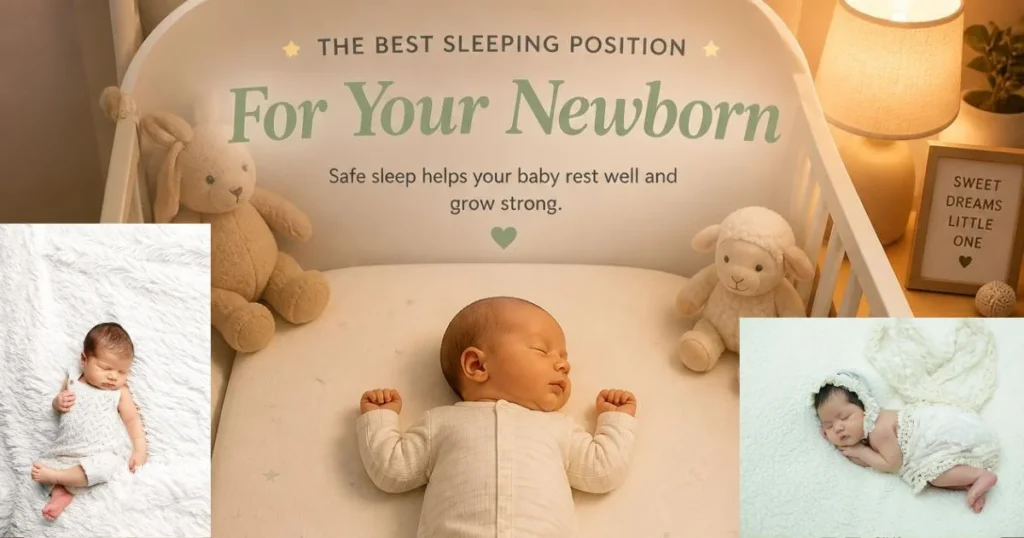
What I Noticed — The Confusion Out There
The Instagram video irritated me more than I thought it would, mainly because the people commenting sounded extremely sure that they were right.
A study in 2026 looked at 569 newborn babies and found that only 42.7% were regularly placed on their backs to sleep. Only 42.7%. Despite decades of public health campaigns. Despite the research being clear. Despite every pediatrician saying the same thing. 56.1% of infants in that same study were sleeping on their side — and 77.3% of parents said they “usually” placed their baby on their back, but only 43.7% actually did so consistently.
Here’s what nobody told me — the gap between what parents say they do and what they actually do is enormous. And a lot of that gap comes from social media, relatives, and the genuine exhaustion of doing the same thing every single time when the baby seems to sleep better in a different way.
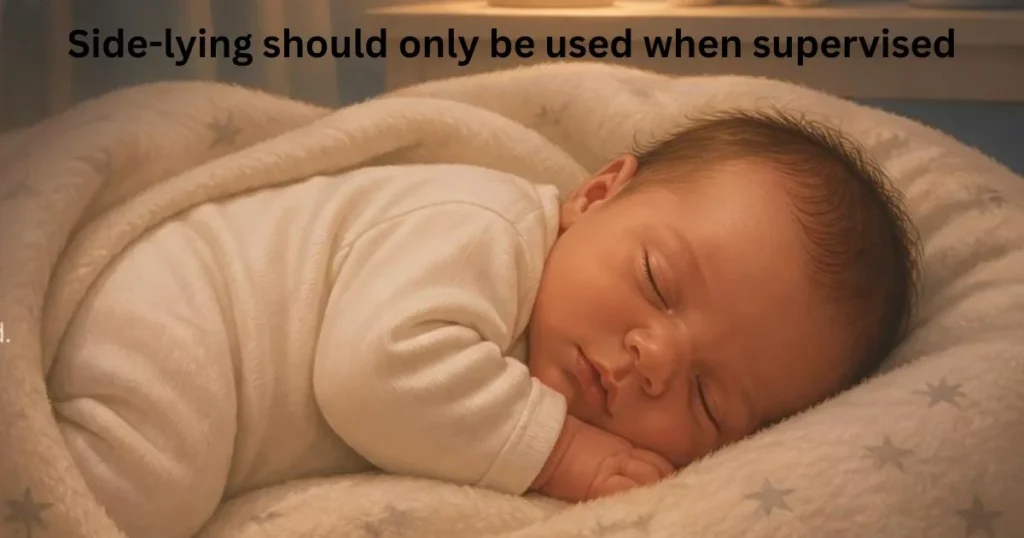
I’ve been there — Ayla seemed to settle more easily on her side some nights. I understood the temptation. But side sleeping is not safe. It’s not “almost as good as back.” Side sleeping is unstable — babies roll from side to stomach easily, and stomach sleeping increases SIDS risk by approximately 3.2 to 4.46 times compared to back sleeping.
The Choking Question — What Changed My Thinking
This is the one that stopped me in the hospital corridor when a nurse mentioned it.
“What if she chokes on her back?”
It sounds logical. It’s one of the most common reasons parents switch positions. And it’s not how baby anatomy actually works. Newborns have a protective airway reflex — when liquid enters the airway, they automatically cough, swallow, or turn their head. Back sleeping doesn’t increase choking risk. The fear of it is real. The risk isn’t.
Honestly, this surprised me too. I had assumed stomach sleeping was somehow “safer” for the airway. Research shows the opposite — stomach sleeping compresses the airway and makes it harder for babies to rouse when oxygen levels drop, which is the mechanism behind many SIDS deaths.
Let me be real with you — 1,529 infants died from SIDS in 2022. Another 1,131 from unknown causes and 1,040 from accidental suffocation. These aren’t abstract statistics. The reason behind sleeping is not optional advice.
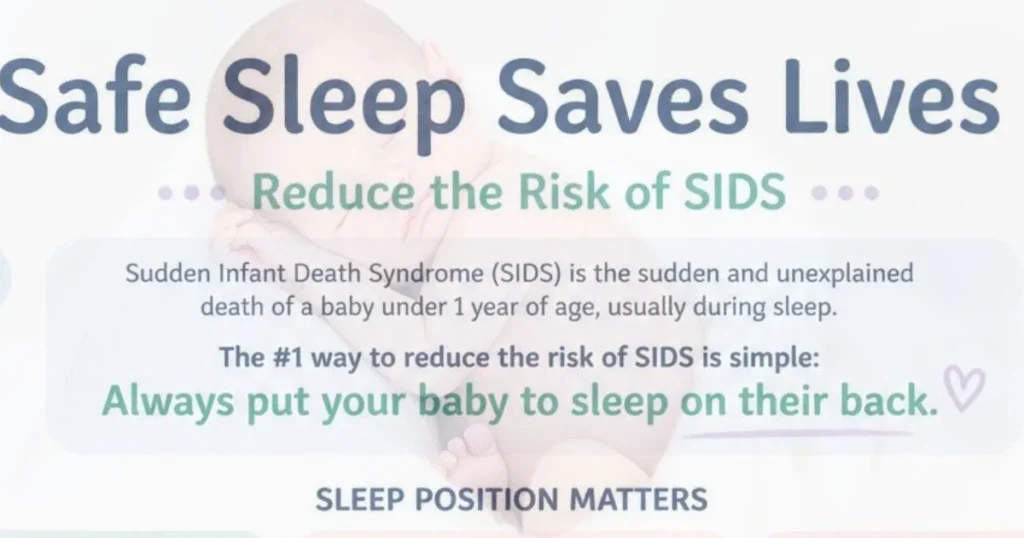
What Surprised Me Most
Two things I hadn’t expected to find in the research.
First — the couch. Couch sleeping increases the risk of infant death by 50 times. Not 50%. Fifty times. I had let Ayla sleep on my chest on the sofa during a feed in those first weeks, and I had no idea that surface specifically was so dangerous. Not a bed. Not a floor. The couch — the softness, the gaps, the angles — makes it uniquely unsafe.
Second — inclined sleepers. Swings, loungers, bouncers, car seats. All of them position a baby at an angle that can cause the head to fall forward, compressing the airway in what’s called positional asphyxiation. These products look safe. Some of them are marketed specifically for babies. The research shows that none of them are safe for unsupervised sleep.
This one thing changed everything for me — I stopped thinking about sleep position in isolation and started thinking about the whole sleep environment. The position matters. The surface matters. The angle matters. All of it together creates either a safe sleep space or an unsafe one.
When to Talk to Your Pediatrician
Most newborn sleep position questions have one answer — back — and your pediatrician will confirm it.
But a few situations are worth specifically raising. If your baby has been diagnosed with a medical condition that your doctor has said requires a different position — that’s the one exception, and it should come with explicit medical guidance. Don’t assume a condition means stomach sleeping is okay without that conversation.
Flat head syndrome — positional plagiocephaly — is a real concern with consistent back sleeping, and worth mentioning to your pediatrician if you notice one side of your baby’s head flattening. The solution is supervised tummy time while awake, not changing the sleep position. They’re separate things.
If your baby can roll independently and rolls onto their stomach during sleep — the AAP says you don’t need to keep repositioning them once they can roll both ways on their own. But you should still start them on their back every single time.
What Actually Helped Us
Once I understood why the best sleeping position for a newborn is non-negotiable,
sticking with it every single time got easier.
Three things made consistent back sleeping easier when it genuinely felt hard.
Supervised tummy time while awake. This is how you prevent a flat head without compromising sleep safety. Short sessions from day one, building up over time. Ayla hated it initially. We built it up slowly. By month two, she’d tolerate it long enough to matter.
A firm, flat sleep surface with nothing else in it. No pillows. No soft bumpers. No positioners. No sleep wedges. Just the mattress and a fitted sheet. The more empty the crib, the safer it is. Every extra item is a risk, not a comfort.
Ignoring the Instagram comments. This sounds small. It wasn’t. The amount of confidently incorrect sleep advice circulating on social media specifically about newborn positions is significant — and it comes from real parents with real babies who appear to be sleeping fine. They might be. Or they might just be lucky. The research isn’t built on luck.
The best sleeping position for a newborn comes down to one simple, research-backed
rule — back to sleep, every time, until 12 months.
FAQ
1. Why is back sleeping the best position for a newborn?
Back sleeping reduces SIDS risk by approximately 50% compared to all other positions. Since the “Back to Sleep” campaign in 1994, SIDS rates have dropped by over 50%. It’s the most consistent, evidence-backed recommendation in newborn care across every major medical organization worldwide.
2. Is side sleeping safe if I support my baby with something?
No. Side sleeping is regarded as nearly as dangerous as stomach sleeping because babies roll from side to stomach easily. No positioning prop makes side sleeping safe — it adds objects to the sleep space, which creates additional risk.
3. What if my baby looks to sleep better on their stomach?
Most of the babies relax more easily in other positions. That’s real. But stomach sleeping increases SIDS risk by 3.2 to 4.46 times. The discomfort of back sleeping resistance is manageable. The risk of stomach sleeping is not worth it.
4. My baby can roll over — do I still need to put them on their back?
Yes — always start them on their back. Once a baby can roll independently in both directions, you don’t need to reposition them if they roll during sleep. But back placement at the start of every sleep remains the recommendation until 12 months.
5. Can my baby sleep in a swing or lounge?
Not unsupervised. Inclined positions in swings, loungers, and car seats can cause positional asphyxiation — the baby’s head falls forward and compresses the airway. These products are not safe for unsupervised or overnight sleep.
The Instagram video, the mother-in-law advice, the 11 pm second-guessing — I understand all of it. The pressure to find something that works when you’re exhausted is real.
But on this one, the evidence is clear. Back to sleep. Every time. It’s the one non-negotiable in newborn sleep, and it’s that clear for good reason.
With love from BabyGuideNest 💛
A Quick Note
Just a mom here, not a pediatrician. Everything in this post is based on AAP guidelines and research I’ve read. If your baby has a specific medical condition that affects positioning — please talk to your own doctor. And if you’re ever unsure about your baby’s sleep setup, your pediatrician is the right person to ask. Not Instagram.